Word Explanation
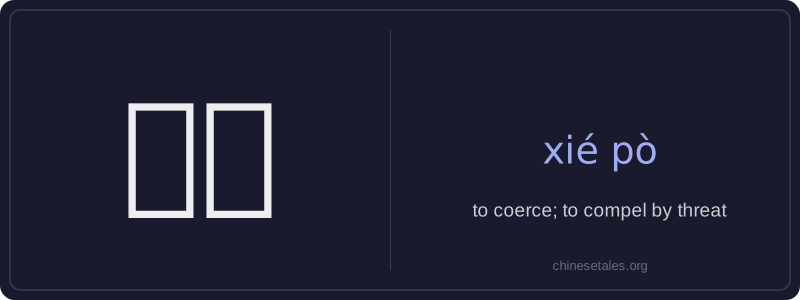
胁迫 (xié pò) is a formal, written verb meaning 'to coerce' or 'to compel by threat'. It combines two characters: 胁 (xié), which originally means 'rib' but metaphorically conveys 'pressing from the side' or 'intimidating pressure', and 迫 (pò), meaning 'to force', 'to compel', or 'to press urgently'. Together, they form a compound emphasizing psychological or physical pressure used to override someone’s free will. The word carries strong negative connotations and implies illegitimacy or moral wrongdoing — it's commonly used in legal, journalistic, or academic contexts rather than casual speech.
胁迫 often appears in descriptions of criminal acts (e.g., blackmail, kidnapping, extortion), political oppression, or abusive relationships. It differs from milder verbs like 说服 (to persuade) or 劝说 (to advise) because it always involves threats — of harm, exposure, loss, or other serious consequences. The subject is typically an authority figure, criminal actor, or powerful entity; the object is usually a vulnerable individual or group.
Example Sentences
Related Words
国语
‘Guó yǔ’ literally means 'national language'—
无论谁
‘无论谁’ (wú lùn shéi) is a pronoun meaning
外语
‘外语’ literally means ‘outside language’ —
面条
‘面条’ (miàn tiáo) literally means ‘flour str
认同
‘认同’ (tóng rèn) is a verb meaning ‘to ident
短袜
‘短袜’ (duǎn wà) literally means ‘short sock
违规
违规 (wéi guī) literally means 'to violate rules
亲笔
‘亲笔’ literally means ‘one’s own hand’—comb