Word Explanation
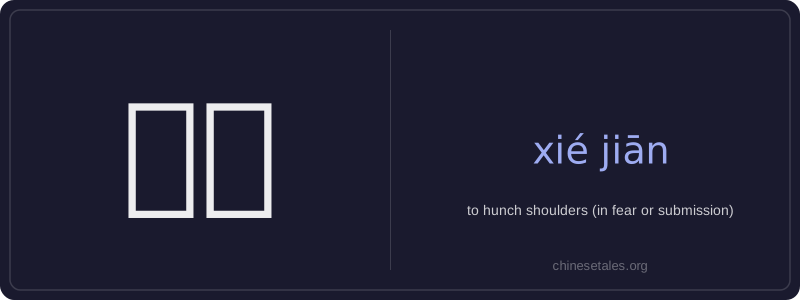
‘胁肩’ is a classical Chinese verb meaning to hunch or draw up one’s shoulders, typically as a physical manifestation of fear, nervousness, deference, or subservience. The character 胁 (xié) originally refers to the ribs or side of the torso — symbolizing vulnerability or constraint — while 肩 (jiān) means ‘shoulder’. Together, they evoke the image of someone contracting their upper body inward, as if trying to make themselves smaller or less conspicuous in the presence of authority or danger.
This expression carries a strong literary and slightly formal or critical tone; it often appears in written descriptions of timid, obsequious, or anxious behavior — especially in historical narratives, essays, or satirical contexts. It is rarely used in casual spoken Mandarin and is more common in fixed phrases like 胁肩谄笑 (hunching shoulders and smiling sycophantically). Modern speakers may recognize it primarily through reading or idioms rather than daily conversation.
Example Sentences
Related Words
国语
‘Guó yǔ’ literally means 'national language'—
无论谁
‘无论谁’ (wú lùn shéi) is a pronoun meaning
外语
‘外语’ literally means ‘outside language’ —
面条
‘面条’ (miàn tiáo) literally means ‘flour str
认同
‘认同’ (tóng rèn) is a verb meaning ‘to ident
短袜
‘短袜’ (duǎn wà) literally means ‘short sock
违规
违规 (wéi guī) literally means 'to violate rules
亲笔
‘亲笔’ literally means ‘one’s own hand’—comb