Word Explanation
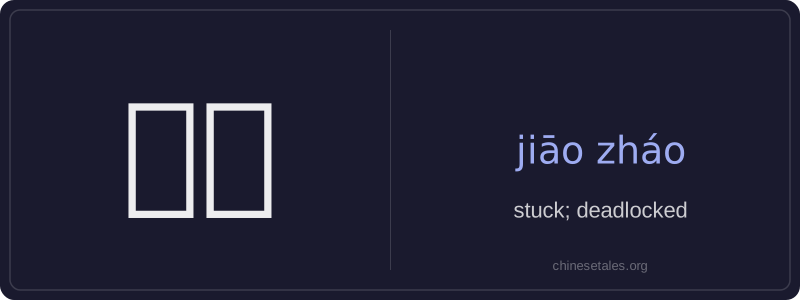
'胶着' (jiāo zháo) literally combines '胶' (jiāo), meaning 'glue' or 'adhesive', and '着' (zháo), a verb particle indicating attachment or sticking. Together, they form an adjective describing a state where two or more forces, parties, or elements are locked in place — unable to advance, retreat, or resolve — much like objects stuck together with glue. It conveys physical immobility as well as abstract impasse.
The term is widely used in both literal and figurative contexts: it describes military standoffs, stalled negotiations, gridlocked traffic, or even psychological states like indecision. Though originally derived from physical adhesion, modern usage leans heavily toward metaphorical deadlock — especially in news, politics, and everyday descriptions of frustrating stagnation. It carries a neutral-to-slightly-negative tone, implying tension and lack of progress without assigning blame.
Example Sentences
Related Words
国语
‘Guó yǔ’ literally means 'national language'—
无论谁
‘无论谁’ (wú lùn shéi) is a pronoun meaning
外语
‘外语’ literally means ‘outside language’ —
亲笔
‘亲笔’ literally means ‘one’s own hand’—comb
面条
‘面条’ (miàn tiáo) literally means ‘flour str
认为
‘认为’ (rèn wéi) is a transitive verb meaning
认同
‘认同’ (tóng rèn) is a verb meaning ‘to ident
短袜
‘短袜’ (duǎn wà) literally means ‘short sock