Word Explanation
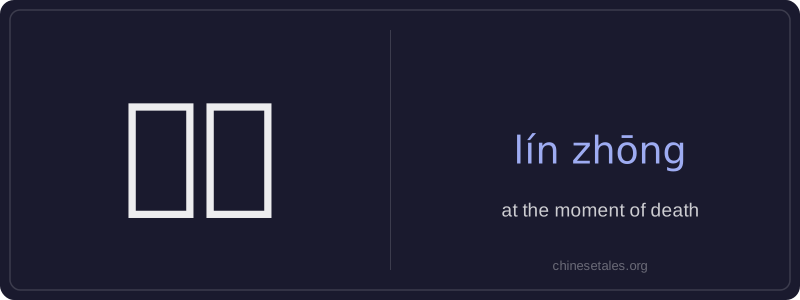
‘临终’ literally means ‘approaching the end’ — 临 (lín) means ‘to approach’ or ‘to be at the verge of’, and 终 (zhōng) means ‘end’ or ‘conclusion’. Together, they specifically refer to the final moments before death, emphasizing the transitional, critical phase just before life ends. It is a formal, respectful, and somewhat solemn term commonly used in medical, hospice, ethical, and familial contexts.
This word carries emotional weight and cultural sensitivity in Chinese-speaking communities, where discussions about death are often approached with care and dignity. It appears frequently in phrases like 临终关怀 (lín zhōng guān huái, ‘palliative care’) and 临终遗言 (lín zhōng yí yán, ‘last words’). Unlike casual terms for dying, 临终 focuses on the human experience in that final window — not the act of dying itself, but the state of being at death’s threshold.
Example Sentences
Related Words
国语
‘Guó yǔ’ literally means 'national language'—
无论谁
‘无论谁’ (wú lùn shéi) is a pronoun meaning
外语
‘外语’ literally means ‘outside language’ —
亲笔
‘亲笔’ literally means ‘one’s own hand’—comb
我的
我的 (wǒ de) is a possessive pronoun meaning 'my'
不对
不对 (bù duì) literally combines 不 (bù), meani
面条
‘面条’ (miàn tiáo) literally means ‘flour str
认为
‘认为’ (rèn wéi) is a transitive verb meaning