Word Explanation
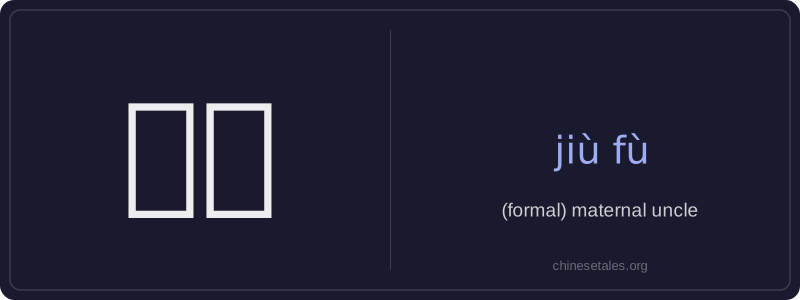
‘舅父’ is a formal, respectful term for one’s mother’s brother — that is, a maternal uncle. The character 舅 (jiù) specifically means ‘maternal uncle’, while 父 (fù) means ‘father’ or ‘male elder’, so together they literally convey ‘uncle-father’, emphasizing both kinship and seniority. This term is commonly used in written Chinese, formal speech, or when addressing or referring to the uncle with deference — especially in traditional contexts, official documents, or family ceremonies.
Unlike the more colloquial 舅舅 (jiù jiu), which is affectionate and widely used in daily conversation, 舅父 carries a tone of respect and distance; it’s rarely used as a direct form of address in casual settings. It may also appear in historical texts, legal descriptions of family relations, or genealogical records. Learners should note that this term applies exclusively to the mother’s side — the father’s brother is called 伯父 (bó fù) or 叔父 (shū fù), not 舅父.
Example Sentences
Related Words
国语
‘Guó yǔ’ literally means 'national language'—
无论谁
‘无论谁’ (wú lùn shéi) is a pronoun meaning
外语
‘外语’ literally means ‘outside language’ —
短袜
‘短袜’ (duǎn wà) literally means ‘short sock
违规
违规 (wéi guī) literally means 'to violate rules
亲笔
‘亲笔’ literally means ‘one’s own hand’—comb
我的
我的 (wǒ de) is a possessive pronoun meaning 'my'
不对
不对 (bù duì) literally combines 不 (bù), meani