Word Explanation
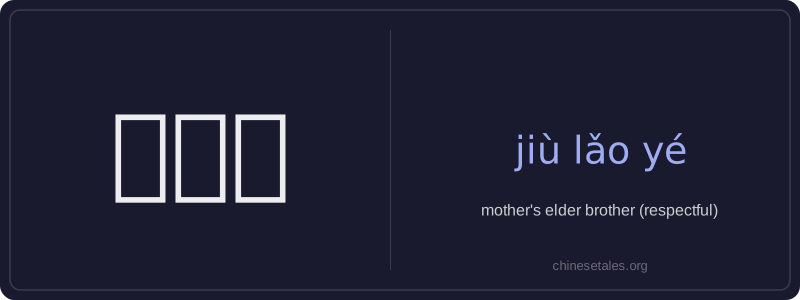
‘舅老爷’ (jiù lǎo yé) is a respectful, slightly formal term for one’s maternal uncle—specifically the elder brother of one’s mother. The compound breaks down as ‘舅’ (jiù), meaning ‘maternal uncle’, plus ‘老爷’ (lǎo yé), an honorific title literally meaning ‘old master’ or ‘respected elder’, often used for older male relatives or esteemed figures. Unlike the neutral ‘舅舅’ (jiù jiu), ‘舅老爷’ conveys extra deference and is commonly used in traditional families, regional dialects (especially northern and central China), or when speaking to or about the uncle in formal or ceremonial contexts.
This term reflects Chinese kinship terminology’s emphasis on age hierarchy and respect. It is not used for younger maternal uncles—those would be addressed as ‘舅爷’ (jiù yé) or more commonly ‘舅舅’. While ‘舅老爷’ appears in literature and oral storytelling, it is less frequent in everyday urban speech among younger generations, who often prefer simpler terms like ‘舅舅’ or even ‘舅’ alone in informal settings.
Example Sentences
Related Words
国语
‘Guó yǔ’ literally means 'national language'—
无论谁
‘无论谁’ (wú lùn shéi) is a pronoun meaning
外语
‘外语’ literally means ‘outside language’ —
短袜
‘短袜’ (duǎn wà) literally means ‘short sock
违规
违规 (wéi guī) literally means 'to violate rules
亲笔
‘亲笔’ literally means ‘one’s own hand’—comb
我的
我的 (wǒ de) is a possessive pronoun meaning 'my'
不对
不对 (bù duì) literally combines 不 (bù), meani