Word Explanation
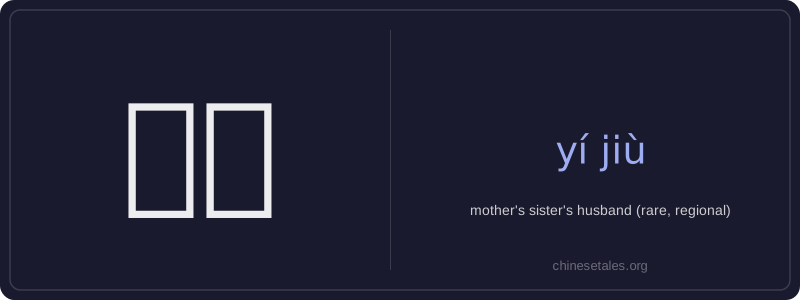
‘姨舅’ (yí jiù) is a compound kinship term referring specifically to the husband of one’s maternal aunt — that is, the man married to one’s mother’s sister. The first character 姨 (yí) means ‘maternal aunt’, and the second 舅 (jiù) means ‘maternal uncle’, but in this fixed compound, 舅 shifts meaning to denote ‘husband’ (a rare, archaic usage). This term is not standard in modern Mandarin; it appears mainly in certain southern dialects or older literary texts and is rarely used in everyday speech.
In contemporary Chinese, people almost always say ‘姨父’ (yí fù) instead — literally ‘aunt-father’, the respectful, widely understood term for the same relationship. ‘姨舅’ may cause confusion among native speakers outside specific regional contexts, and learners should treat it as a lexical curiosity rather than a functional vocabulary item for daily communication.
Example Sentences
Related Words
国语
‘Guó yǔ’ literally means 'national language'—
无论谁
‘无论谁’ (wú lùn shéi) is a pronoun meaning
外语
‘外语’ literally means ‘outside language’ —
短袜
‘短袜’ (duǎn wà) literally means ‘short sock
违规
违规 (wéi guī) literally means 'to violate rules
亲笔
‘亲笔’ literally means ‘one’s own hand’—comb
我的
我的 (wǒ de) is a possessive pronoun meaning 'my'
不对
不对 (bù duì) literally combines 不 (bù), meani