Word Explanation
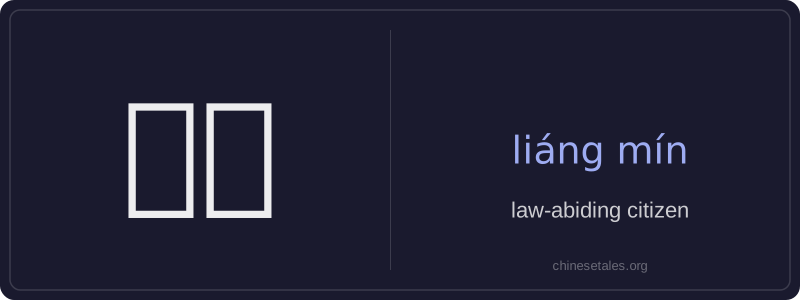
'良民' literally combines '良' (liáng), meaning 'good' or 'virtuous', and '民' (mín), meaning 'people' or 'citizen'. Together, it denotes a 'law-abiding citizen' — someone who obeys laws, fulfills civic duties, and behaves responsibly in society. Historically, the term appeared in imperial and Republican-era documents to distinguish compliant subjects from rebels or criminals; today, it’s used more neutrally in formal contexts like public notices, legal education, or community campaigns promoting social harmony.
While not inherently ironic or sarcastic, tone and context matter: in casual speech, calling someone a '良民' can carry gentle humor or mild teasing (e.g., praising someone for unusually strict rule-following). It is rarely used in personal introductions or self-description, as it emphasizes conformity rather than individuality. The term carries positive connotations but implies passive compliance more than active civic engagement.
Example Sentences
Related Words
国语
‘Guó yǔ’ literally means 'national language'—
无论谁
‘无论谁’ (wú lùn shéi) is a pronoun meaning
外语
‘外语’ literally means ‘outside language’ —
亲笔
‘亲笔’ literally means ‘one’s own hand’—comb
短袜
‘短袜’ (duǎn wà) literally means ‘short sock
违规
违规 (wéi guī) literally means 'to violate rules
我的
我的 (wǒ de) is a possessive pronoun meaning 'my'
不对
不对 (bù duì) literally combines 不 (bù), meani