Word Explanation
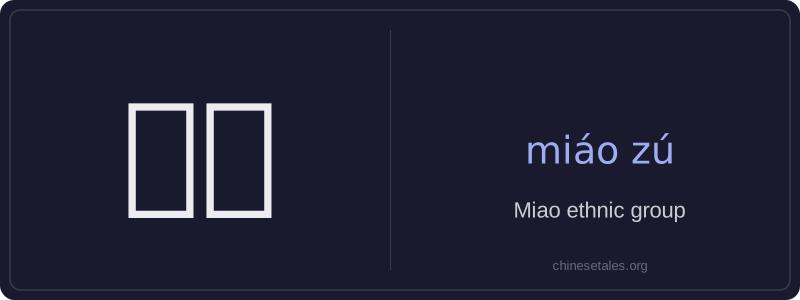
‘苗族’ (Miáo zú) is the official Chinese name for the Miao ethnic group, one of China’s 56 officially recognized ethnic minorities. The character ‘苗’ originally referred to young plants or seedlings but historically came to denote this particular ethnic group—likely due to phonetic association rather than botanical meaning. ‘族’ means ‘ethnic group’ or ‘clan’, and together the term specifically identifies a distinct cultural and linguistic community with roots primarily in southern China’s mountainous regions, including Guizhou, Yunnan, Hunan, and Guangxi.
The Miao people are renowned for their rich oral traditions, intricate silver jewelry, colorful embroidered clothing, and distinctive musical instruments like the lusheng (a reed pipe). While ‘苗族’ is neutral and formal—used in government documents, education, and media—it carries cultural pride and historical significance. It should not be confused with the generic word ‘苗’ meaning ‘seedling’ or ‘young plant’, as the compound ‘苗族’ functions exclusively as a proper noun referring to the ethnic group.
Example Sentences
Related Words
国语
‘Guó yǔ’ literally means 'national language'—
无论谁
‘无论谁’ (wú lùn shéi) is a pronoun meaning
外语
‘外语’ literally means ‘outside language’ —
亲笔
‘亲笔’ literally means ‘one’s own hand’—comb
短袜
‘短袜’ (duǎn wà) literally means ‘short sock
违规
违规 (wéi guī) literally means 'to violate rules
我的
我的 (wǒ de) is a possessive pronoun meaning 'my'
不对
不对 (bù duì) literally combines 不 (bù), meani