Word Explanation
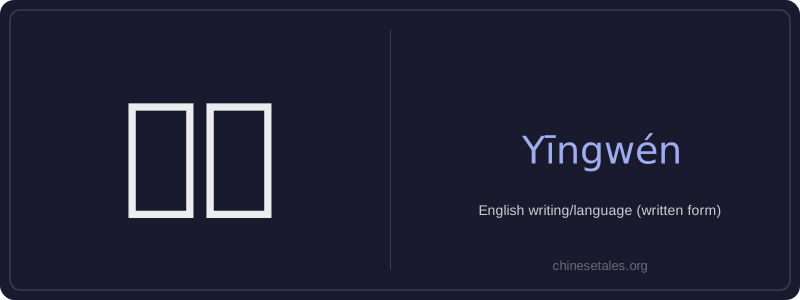
"Yīngwén" literally means "English writing" or "English language" — combining 英 (yīng), short for 英国 (Yīngguó, "England" or "UK"), and 文 (wén), meaning "writing," "script," or "language." It refers specifically to the written form of English, though in everyday usage it often covers both written and spoken English as a whole. Unlike "English" in English, which is unmarked for register, "Yīngwén" is neutral and widely used in educational, professional, and daily contexts — for example, when referring to textbooks, exams, signs, or documents.
This term emphasizes linguistic form rather than nationality or culture; you wouldn’t say "Yīngwén" to mean "a British person." It’s commonly paired with words like 课 (kè, "class"), 老师 (lǎoshī, "teacher"), or 水平 (shuǐpíng, "proficiency level"). While it can appear in compound terms like 英文报纸 (Yīngwén bàozhǐ, "English newspaper"), it rarely stands alone without context — e.g., saying just "我学英文" ("I study English") is natural, but "这是英文" ("This is English") usually implies "this is English text/writing."
Example Sentences
Related Words
国语
‘Guó yǔ’ literally means 'national language'—
无论谁
‘无论谁’ (wú lùn shéi) is a pronoun meaning
外语
‘外语’ literally means ‘outside language’ —
亲笔
‘亲笔’ literally means ‘one’s own hand’—comb
短袜
‘短袜’ (duǎn wà) literally means ‘short sock
违规
违规 (wéi guī) literally means 'to violate rules
我的
我的 (wǒ de) is a possessive pronoun meaning 'my'
不对
不对 (bù duì) literally combines 不 (bù), meani