Word Explanation
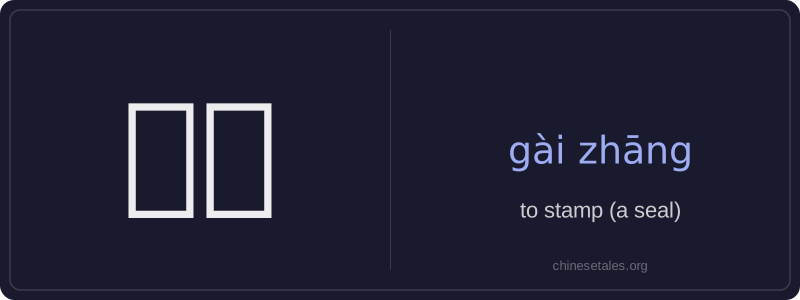
'Gài zhāng' literally means 'to cover (盖) a seal (章)' and refers to the act of pressing an official or personal seal onto a document, form, or object. In Chinese administrative, legal, and business contexts, stamping a seal serves the same function as a handwritten signature in English-speaking countries — it authenticates, approves, or finalizes something. The character 盖 conveys the motion of pressing down, while 章 specifically denotes a carved seal, often made of stone or wood, bearing a person’s name or an organization’s emblem.
This verb is commonly used in formal or bureaucratic situations: applying for permits, signing contracts, processing paperwork at government offices, or verifying academic credentials. It’s rarely used in casual speech unless referring to such procedures. Note that the seal itself is also called 章 (zhāng), and the action always implies deliberate, authorized application — not decorative or playful stamping.
Example Sentences
Related Words
国语
‘Guó yǔ’ literally means 'national language'—
无论谁
‘无论谁’ (wú lùn shéi) is a pronoun meaning
外语
‘外语’ literally means ‘outside language’ —
亲笔
‘亲笔’ literally means ‘one’s own hand’—comb
认同
‘认同’ (tóng rèn) is a verb meaning ‘to ident
短袜
‘短袜’ (duǎn wà) literally means ‘short sock
违规
违规 (wéi guī) literally means 'to violate rules
我的
我的 (wǒ de) is a possessive pronoun meaning 'my'