Word Explanation
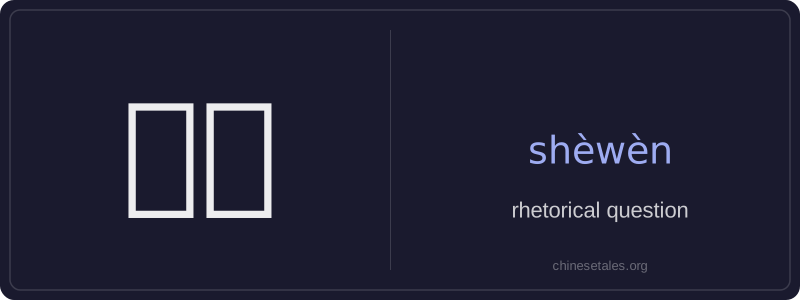
Shèwèn (设问) is a rhetorical device in Chinese where a speaker asks a question not to seek an answer, but to emphasize a point, provoke thought, or add dramatic effect. The character 设 (shè) means 'to set up' or 'to establish', and 问 (wèn) means 'to ask' — together they literally mean 'to set up a question'. Unlike genuine questions, a shèwèn is immediately followed by its own answer, often within the same sentence or paragraph.
This device is common in formal writing, speeches, essays, and classical or literary Chinese. It helps structure arguments, highlight contrasts, or guide readers toward a conclusion. While it appears in spoken language occasionally (e.g., in teaching or persuasive speaking), it’s more characteristic of written, polished expression than casual conversation. Mastery of shèwèn supports deeper comprehension of Chinese rhetoric and stylistic nuance.
Example Sentences
Related Words
国语
‘Guó yǔ’ literally means 'national language'—
无论谁
‘无论谁’ (wú lùn shéi) is a pronoun meaning
不对
不对 (bù duì) literally combines 不 (bù), meani
外语
‘外语’ literally means ‘outside language’ —
违规
违规 (wéi guī) literally means 'to violate rules
亲笔
‘亲笔’ literally means ‘one’s own hand’—comb
我的
我的 (wǒ de) is a possessive pronoun meaning 'my'
面条
‘面条’ (miàn tiáo) literally means ‘flour str