Word Explanation
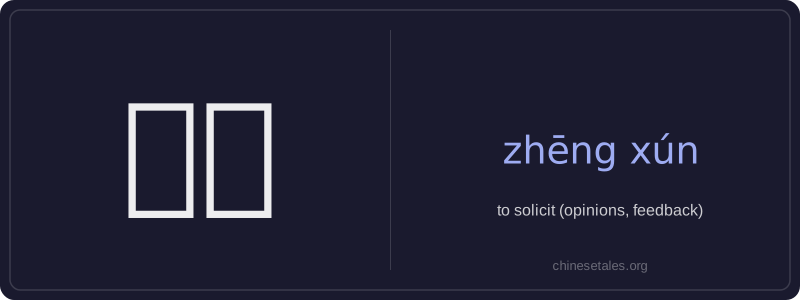
‘征询’ is a formal verb meaning 'to solicit'—typically opinions, feedback, suggestions, or advice—from others. It combines two characters: 征 (zhēng), which conveys 'to seek,' 'to levy,' or 'to enlist,' and 询 (xún), meaning 'to ask' or 'to inquire.' Together, they emphasize an active, respectful effort to gather input from others, often in professional, administrative, or public contexts. Unlike casual questioning, 征询 implies intentionality, openness to response, and institutional or organizational purpose.
This word frequently appears in official notices, surveys, policy development, and workplace communication—for example, when a government agency seeks public input on a new regulation, or a company asks employees for suggestions on improving workflows. It’s rarely used in informal conversations among friends or family. The object of 征询 is usually abstract and collective: opinions (意见), suggestions (建议), feedback (反馈), or views (看法).
Example Sentences
Related Words
国语
‘Guó yǔ’ literally means 'national language'—
无论谁
‘无论谁’ (wú lùn shéi) is a pronoun meaning
不对
不对 (bù duì) literally combines 不 (bù), meani
外语
‘外语’ literally means ‘outside language’ —
违规
违规 (wéi guī) literally means 'to violate rules
亲笔
‘亲笔’ literally means ‘one’s own hand’—comb
我的
我的 (wǒ de) is a possessive pronoun meaning 'my'
面条
‘面条’ (miàn tiáo) literally means ‘flour str