Word Explanation
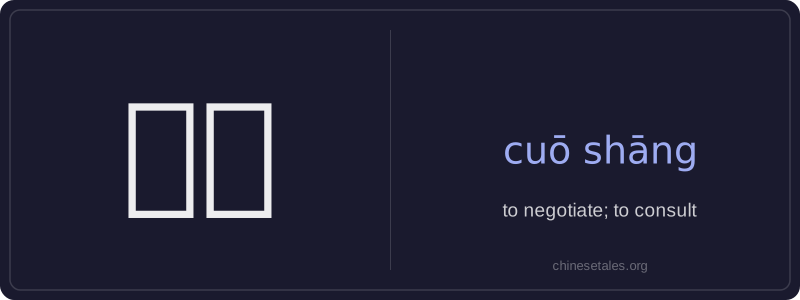
磋商 means 'to negotiate' or 'to consult', especially in formal, cooperative contexts where parties exchange views to reach mutual understanding or agreement. The character 磋 (cuō) originally refers to polishing jade—symbolizing careful refinement—and 商 (shāng) means 'to discuss' or 'to deliberate'. Together, they evoke the idea of jointly refining ideas through respectful, back-and-forth dialogue, not adversarial bargaining. It is commonly used in diplomatic, business, academic, or administrative settings.
This word carries a tone of seriousness, equality, and goodwill; it implies participants are open-minded and committed to finding common ground. Unlike generic terms like 讨论 (tǎolùn, 'to discuss'), 磋商 emphasizes process-oriented, solution-focused consultation—often involving representatives, officials, or professionals. It frequently appears in written reports, official announcements, and formal speeches, though it’s also appropriate in spoken professional contexts.
Example Sentences
Related Words
国语
‘Guó yǔ’ literally means 'national language'—
无论谁
‘无论谁’ (wú lùn shéi) is a pronoun meaning
不对
不对 (bù duì) literally combines 不 (bù), meani
外语
‘外语’ literally means ‘outside language’ —
违规
违规 (wéi guī) literally means 'to violate rules
亲笔
‘亲笔’ literally means ‘one’s own hand’—comb
我的
我的 (wǒ de) is a possessive pronoun meaning 'my'
面条
‘面条’ (miàn tiáo) literally means ‘flour str