Word Explanation
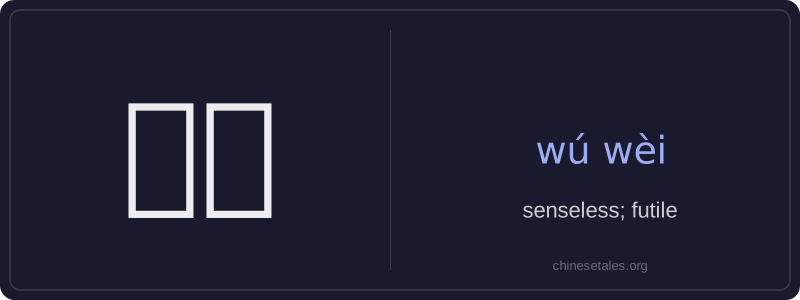
'Wú wèi' literally combines 'wú' (without, lacking) and 'wèi' (meaning, purpose), together conveying the idea of something that lacks sense, purpose, or justification. It describes actions, words, or situations that are pointless, futile, or needlessly provocative—often carrying a mild critical or disapproving tone. Unlike neutral terms like 'useless', 'wú wèi' emphasizes the absence of rational grounds or constructive value.
This adjective is commonly used in written and formal spoken Chinese to evaluate arguments, conflicts, efforts, or emotional reactions. It frequently appears in phrases like '无谓的争论' (a senseless argument) or '无谓的牺牲' (a futile sacrifice). While it can modify nouns directly, it rarely stands alone as a predicate without additional context (e.g., it’s more natural to say '这是无谓的' than just '无谓!'). It often implies wasted energy or avoidable harm, especially when calm judgment would have been preferable.
Example Sentences
Related Words
国语
‘Guó yǔ’ literally means 'national language'—
无论谁
‘无论谁’ (wú lùn shéi) is a pronoun meaning
不对
不对 (bù duì) literally combines 不 (bù), meani
外语
‘外语’ literally means ‘outside language’ —
违规
违规 (wéi guī) literally means 'to violate rules
亲笔
‘亲笔’ literally means ‘one’s own hand’—comb
我的
我的 (wǒ de) is a possessive pronoun meaning 'my'
面条
‘面条’ (miàn tiáo) literally means ‘flour str