Word Explanation
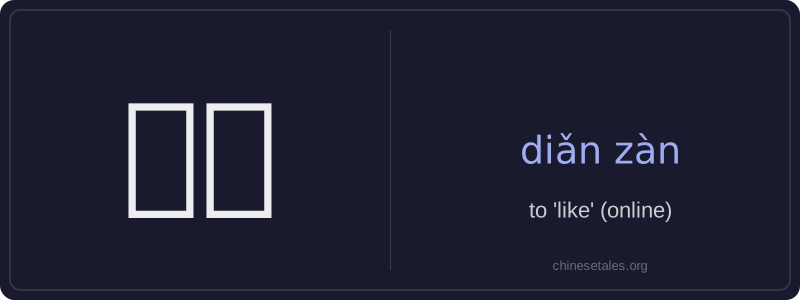
'Dian zan' literally means 'to click + praise' — combining the verb 点 (diǎn, 'to tap/click') and the noun/verb 赞 (zàn, 'praise' or 'like'). It originated from social media interfaces where users tap or click a thumbs-up icon to express approval, appreciation, or support for a post, photo, or comment. Today it’s widely used across platforms like WeChat, Weibo, and Douyin, both online and in spoken Chinese.
Though rooted in digital interaction, 'dian zan' has entered everyday speech as a general term for showing affirmation — for example, praising someone’s effort or endorsing an idea. It functions as a transitive verb and usually takes a direct object (e.g., dian zan ta de pengyouquan tie — 'like their WeChat Moments post'). Unlike English 'like', it carries a slightly warmer, more active connotation — not just passive consumption but intentional support.
Example Sentences
Related Words
国语
‘Guó yǔ’ literally means 'national language'—
无论谁
‘无论谁’ (wú lùn shéi) is a pronoun meaning
不对
不对 (bù duì) literally combines 不 (bù), meani
外语
‘外语’ literally means ‘outside language’ —
违规
违规 (wéi guī) literally means 'to violate rules
亲笔
‘亲笔’ literally means ‘one’s own hand’—comb
我的
我的 (wǒ de) is a possessive pronoun meaning 'my'
面条
‘面条’ (miàn tiáo) literally means ‘flour str