Word Explanation
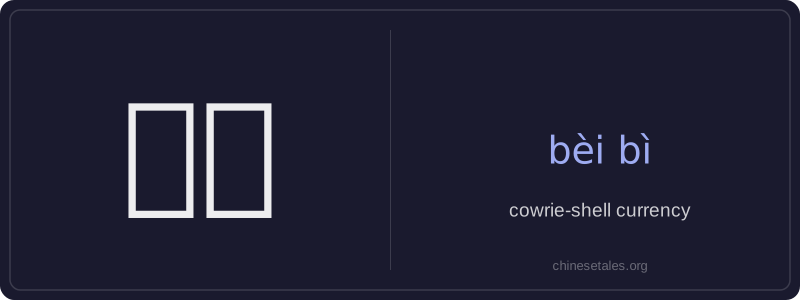
‘贝币’ (bèi bì) literally means ‘shell currency’ — ‘贝’ refers to cowrie shells, small marine mollusks historically collected and used as money in ancient China, while ‘币’ means ‘currency’ or ‘coin’. Together, the term specifically denotes the cowrie shells that functioned as standardized units of exchange during the Shang and Zhou dynasties, long before metal coins were introduced. These shells were valued for their durability, portability, and natural uniformity.
Archaeological findings show that cowrie shells—often strung together or stored in ritual bronze vessels—were used not only for trade but also as symbols of wealth and status, especially among elites. Today, ‘贝币’ appears almost exclusively in historical, archaeological, or numismatic contexts; it is not used in modern financial language. The character ‘贝’ remains a semantic component in many money-related characters (e.g., 财, 贷, 购), reflecting its foundational role in Chinese monetary history.
Example Sentences
Related Words
国语
‘Guó yǔ’ literally means 'national language'—
无论谁
‘无论谁’ (wú lùn shéi) is a pronoun meaning
不对
不对 (bù duì) literally combines 不 (bù), meani
外语
‘外语’ literally means ‘outside language’ —
违规
违规 (wéi guī) literally means 'to violate rules
短袜
‘短袜’ (duǎn wà) literally means ‘short sock
亲笔
‘亲笔’ literally means ‘one’s own hand’—comb
我的
我的 (wǒ de) is a possessive pronoun meaning 'my'