Word Explanation
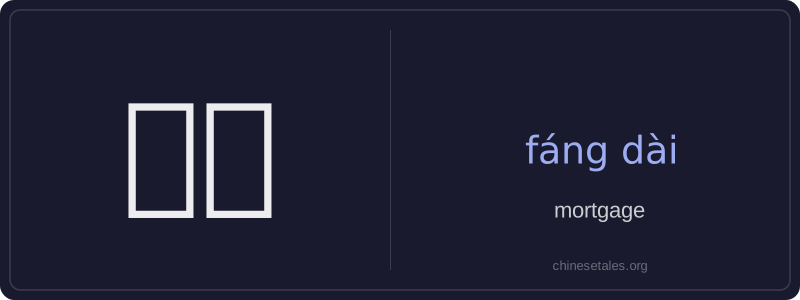
‘房贷’ (fáng dài) literally means ‘house loan’ — combining 房 (fáng, ‘house’ or ‘residential property’) and 贷 (dài, ‘loan’ or ‘to lend’). It refers specifically to a long-term loan taken out to purchase real estate, typically a home or apartment. Unlike general personal loans, a mortgage is secured against the property itself, meaning the lender can reclaim it if repayments are not made.
This term is widely used in everyday financial discussions in China — when people buy homes, discuss monthly payments, apply for bank approval, or compare interest rates. It often appears in formal contexts like banking, real estate contracts, and government housing policies. While ‘房贷’ is neutral and standard, it carries practical weight: many Chinese families spend decades repaying it, making it central to household budgeting and life planning.
Example Sentences
Related Words
国语
‘Guó yǔ’ literally means 'national language'—
无论谁
‘无论谁’ (wú lùn shéi) is a pronoun meaning
不对
不对 (bù duì) literally combines 不 (bù), meani
外语
‘外语’ literally means ‘outside language’ —
违规
违规 (wéi guī) literally means 'to violate rules
亲笔
‘亲笔’ literally means ‘one’s own hand’—comb
我的
我的 (wǒ de) is a possessive pronoun meaning 'my'
短袜
‘短袜’ (duǎn wà) literally means ‘short sock