Word Explanation
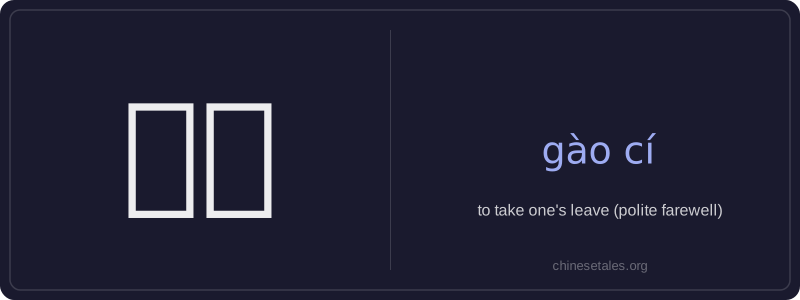
‘告辞’ is a formal, polite verb meaning 'to take one's leave' or 'to bid farewell.' It literally combines 告 (gào, 'to announce' or 'to tell') and 辞 (cí, 'to resign' or 'to decline'), together conveying the idea of formally announcing one’s departure. Unlike casual farewells like 再见 (zài jiàn), 告辞 carries respectful weight and is typically used when leaving a gathering, ending a meeting, or departing from someone senior or in a formal setting.
This expression reflects traditional Chinese etiquette—emphasizing humility and deference upon departure. It’s often preceded by a polite phrase such as ‘谢谢您的招待’ (Thank you for your hospitality) and may be accompanied by a slight bow. While still common in business, academic, or ceremonial contexts, it’s rarely used among close friends or family, where simpler farewells are preferred.
Example Sentences
Related Words
国语
‘Guó yǔ’ literally means 'national language'—
无论谁
‘无论谁’ (wú lùn shéi) is a pronoun meaning
不对
不对 (bù duì) literally combines 不 (bù), meani
外语
‘外语’ literally means ‘outside language’ —
违规
违规 (wéi guī) literally means 'to violate rules
亲笔
‘亲笔’ literally means ‘one’s own hand’—comb
我的
我的 (wǒ de) is a possessive pronoun meaning 'my'
短袜
‘短袜’ (duǎn wà) literally means ‘short sock