Word Explanation
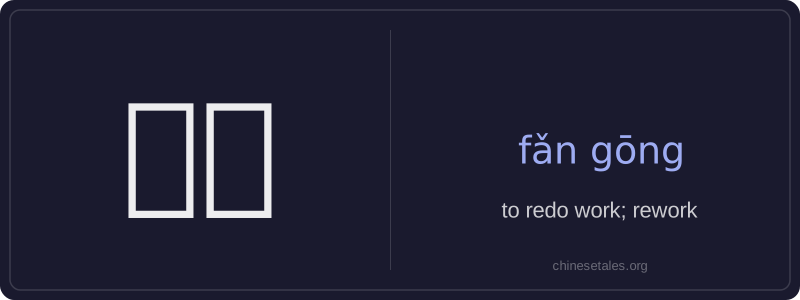
返工 (fǎn gōng) literally combines 返 (fǎn), meaning 'to return' or 'to go back', and 工 (gōng), meaning 'work' or 'job'. Together, it means 'to redo work' — specifically, to repeat a task because the initial attempt was incorrect, incomplete, or failed to meet standards. It’s commonly used in manufacturing, construction, software development, and everyday office or school contexts when errors require correction and re-execution.
This term carries a slightly negative connotation — implying inefficiency, oversight, or quality issues — so it’s often heard in problem-solving discussions, project reviews, or feedback sessions. Unlike general verbs like 重做 (chóng zuò, 'to do again'), 返工 emphasizes that the work must be redone *in full or in part* due to failure to pass inspection or fulfill requirements. It’s typically used transitively with an object (e.g., 返工这个报告), though the object is sometimes omitted when context is clear.
Example Sentences
Related Words
国语
‘Guó yǔ’ literally means 'national language'—
无论谁
‘无论谁’ (wú lùn shéi) is a pronoun meaning
不对
不对 (bù duì) literally combines 不 (bù), meani
外语
‘外语’ literally means ‘outside language’ —
违规
违规 (wéi guī) literally means 'to violate rules
亲笔
‘亲笔’ literally means ‘one’s own hand’—comb
我的
我的 (wǒ de) is a possessive pronoun meaning 'my'
短袜
‘短袜’ (duǎn wà) literally means ‘short sock