Word Explanation
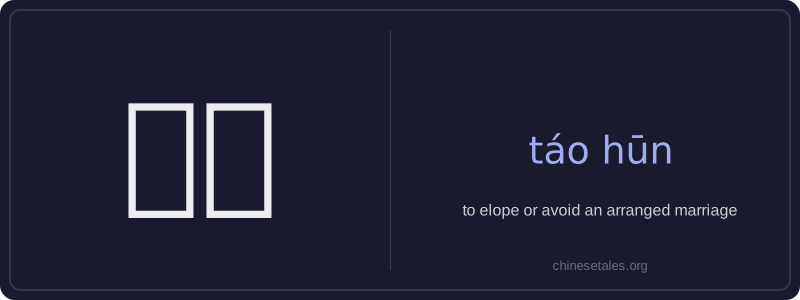
逃婚 literally means 'to flee marriage' — combining 逃 (táo, 'to escape or flee') and 婚 (hūn, 'marriage'). It refers specifically to the act of running away before or shortly after a wedding ceremony, usually to avoid an arranged, unwanted, or pressured marriage. Historically common in contexts where families arranged marriages without the couple’s full consent, it carries strong connotations of personal autonomy, resistance, or desperation.
Today, 逃婚 is used both literally and figuratively: it may describe someone who abandons their own wedding at the last minute, or it can appear in storytelling, news reports, or discussions about marital freedom and social expectations. Though less frequent in modern urban China due to greater individual choice, it remains a culturally resonant term — often evoking drama, rebellion, or emotional conflict. It is not used for divorce or separation after marriage; that is 离婚 (líhūn). The verb functions transitively or intransitively and commonly appears with time or manner modifiers like 临阵 (línzhèn, 'at the last moment') or 私下 (sīxià, 'in secret').
Example Sentences
Related Words
国语
‘Guó yǔ’ literally means 'national language'—
无论谁
‘无论谁’ (wú lùn shéi) is a pronoun meaning
不对
不对 (bù duì) literally combines 不 (bù), meani
外语
‘外语’ literally means ‘outside language’ —
违规
违规 (wéi guī) literally means 'to violate rules
亲笔
‘亲笔’ literally means ‘one’s own hand’—comb
我的
我的 (wǒ de) is a possessive pronoun meaning 'my'
短袜
‘短袜’ (duǎn wà) literally means ‘short sock