Word Explanation
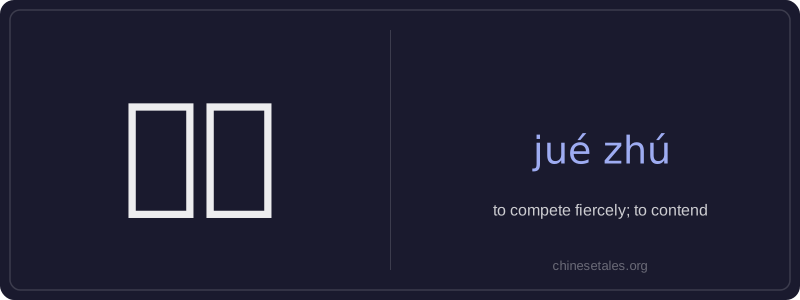
角逐 literally combines 角 (jué), meaning 'to compete' or 'to contend' — historically referencing horn-locking combat among animals like deer or rams — and 逐 (zhú), meaning 'to chase' or 'to pursue'. Together, they evoke a vivid image of rivals actively chasing and clashing for dominance, much like animals vying for territory or mates. The word carries strong connotations of intensity, rivalry, and high stakes.
It is commonly used in formal or literary contexts to describe fierce competition — especially in politics, sports, business, or academic contests — where outcomes are uncertain and effort is intense. While it can appear in spoken Chinese, it leans toward written or elevated register. Unlike neutral verbs like 竞争 (jìngzhēng), 角逐 emphasizes active, head-to-head struggle and often implies physical or strategic confrontation.
Example Sentences
Related Words
国语
‘Guó yǔ’ literally means 'national language'—
无论谁
‘无论谁’ (wú lùn shéi) is a pronoun meaning
不对
不对 (bù duì) literally combines 不 (bù), meani
外语
‘外语’ literally means ‘outside language’ —
违规
违规 (wéi guī) literally means 'to violate rules
亲笔
‘亲笔’ literally means ‘one’s own hand’—comb
我的
我的 (wǒ de) is a possessive pronoun meaning 'my'
短袜
‘短袜’ (duǎn wà) literally means ‘short sock