Word Explanation
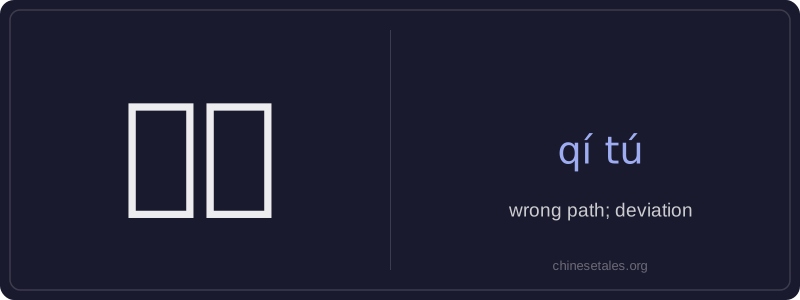
'歧途' literally means 'forked path'—'歧' (qí) signifies divergence, branching, or deviation, while '途' (tú) means 'path' or 'way'. Together, the term metaphorically denotes a wrong or misguided course of action, belief, or life direction. It carries a strong connotation of moral, intellectual, or behavioral error—often implying that one has strayed from truth, virtue, or sound judgment.
The word is commonly used in formal, literary, or advisory contexts: warnings about bad influences, poor decisions, or ideological confusion. It appears frequently in essays, speeches, and educational materials discussing ethics, personal growth, or social issues. Though neutral in structure, '歧途' almost always bears negative evaluative weight—it's not merely an alternative path, but one that leads to harm or loss of integrity.
Example Sentences
Related Words
国语
‘Guó yǔ’ literally means 'national language'—
无论谁
‘无论谁’ (wú lùn shéi) is a pronoun meaning
不对
不对 (bù duì) literally combines 不 (bù), meani
外语
‘外语’ literally means ‘outside language’ —
违规
违规 (wéi guī) literally means 'to violate rules
亲笔
‘亲笔’ literally means ‘one’s own hand’—comb
我的
我的 (wǒ de) is a possessive pronoun meaning 'my'
短袜
‘短袜’ (duǎn wà) literally means ‘short sock