Word Explanation
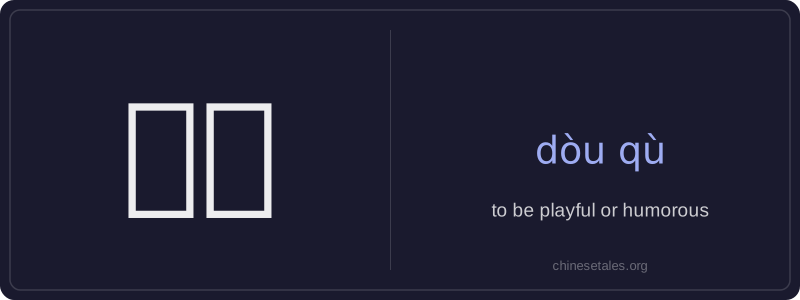
逗趣 is a verb meaning 'to be playful or humorous'—specifically, to act in a lighthearted, teasing, or amusing way to bring joy or laughter. The character 逗 means 'to tease, provoke playfully' (as in 逗狗 'to tease a dog'), while 趣 means 'interest, charm, or fun'. Together, they convey the idea of intentionally engaging someone with wit, gentle mockery, or cheerful antics—not to offend, but to brighten the mood. It’s commonly used in informal spoken and written Chinese, especially when describing social interactions among friends, family, or colleagues.
This word often implies warmth and familiarity: you wouldn’t typically 逗趣 a stranger or superior without context. It frequently appears in descriptions of behavior ('He loves to 逗趣 his little sister') or as a verbal action in dialogue ('Stop 逗趣 me!'). Unlike more formal synonyms like 幽默 (yōu mò, 'humorous'), 逗趣 carries a tactile, interactive quality—it’s about doing something playful, not just being witty.
Example Sentences
Related Words
国语
‘Guó yǔ’ literally means 'national language'—
无论谁
‘无论谁’ (wú lùn shéi) is a pronoun meaning
不对
不对 (bù duì) literally combines 不 (bù), meani
外语
‘外语’ literally means ‘outside language’ —
违规
违规 (wéi guī) literally means 'to violate rules
亲笔
‘亲笔’ literally means ‘one’s own hand’—comb
我的
我的 (wǒ de) is a possessive pronoun meaning 'my'
短袜
‘短袜’ (duǎn wà) literally means ‘short sock