Word Explanation
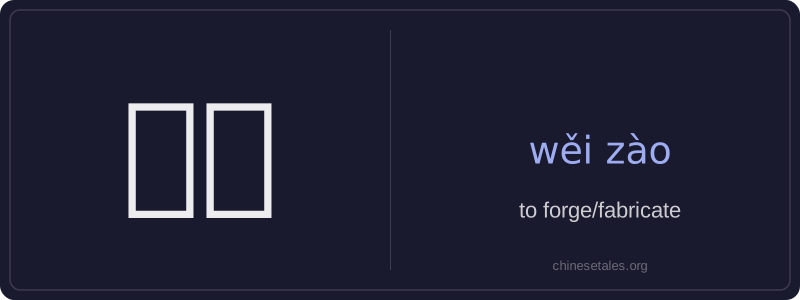
伪造 (wěi zào) is a verb meaning 'to forge' or 'to fabricate' — typically referring to the illegal or deceptive creation of something false that is meant to appear genuine, such as documents, currency, artwork, or evidence. The first character 伪 (wěi) means 'false', 'fake', or 'spurious', while the second character 造 (zào) means 'to make' or 'to create'. Together, they form a compound verb emphasizing intentional, deceptive production — not just making something, but making it with the purpose of deception.
This word carries strong negative connotations and is commonly used in legal, journalistic, and academic contexts. It implies deliberate wrongdoing, often with serious consequences: forging identification, counterfeiting money, or fabricating research data all fall under 伪造. Unlike neutral terms like 制作 (to produce) or 编造 (to invent, sometimes less severe), 伪造 inherently suggests illegitimacy and ethical violation. It is rarely used for harmless imitation or creative reinterpretation.
Example Sentences
Related Words
国语
‘Guó yǔ’ literally means 'national language'—
无论谁
‘无论谁’ (wú lùn shéi) is a pronoun meaning
不对
不对 (bù duì) literally combines 不 (bù), meani
外语
‘外语’ literally means ‘outside language’ —
违规
违规 (wéi guī) literally means 'to violate rules
亲笔
‘亲笔’ literally means ‘one’s own hand’—comb
我的
我的 (wǒ de) is a possessive pronoun meaning 'my'
短袜
‘短袜’ (duǎn wà) literally means ‘short sock