Word Explanation
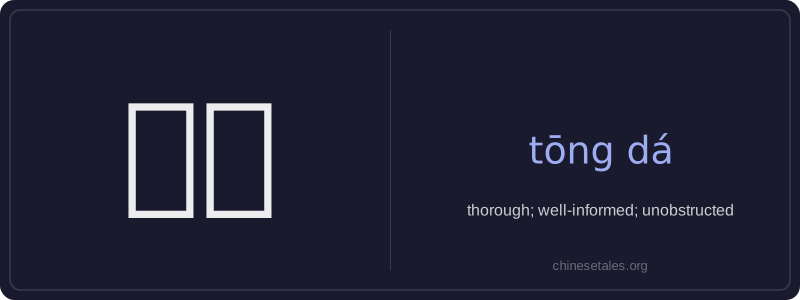
通达 (tōng dá) is an elegant, somewhat formal adjective meaning 'thorough', 'well-informed', or 'unobstructed'. Literally, 通 (tōng) means 'to pass through' or 'comprehensive', and 达 (dá) means 'to reach', 'to achieve', or 'to understand fully'. Together, they convey a sense of clarity, mastery, and smooth flow—whether referring to knowledge, communication, transportation, or personal insight. It often describes people who possess deep, integrated understanding—not just surface-level facts—but also the ability to see connections and act wisely.
This word appears frequently in written Chinese and formal speech, especially in contexts like education, governance, philosophy, and infrastructure. You’ll hear it describing clear thinking ('思路通达'), well-connected transport networks ('交通通达'), or a person’s broad-minded, discerning outlook ('学识通达'). Though positive and respectful, it’s rarely used in casual daily chat—it carries a tone of maturity and cultivation.
Example Sentences
Related Words
国语
‘Guó yǔ’ literally means 'national language'—
无论谁
‘无论谁’ (wú lùn shéi) is a pronoun meaning
不对
不对 (bù duì) literally combines 不 (bù), meani
外语
‘外语’ literally means ‘outside language’ —
违规
违规 (wéi guī) literally means 'to violate rules
亲笔
‘亲笔’ literally means ‘one’s own hand’—comb
我的
我的 (wǒ de) is a possessive pronoun meaning 'my'
短袜
‘短袜’ (duǎn wà) literally means ‘short sock