Word Explanation
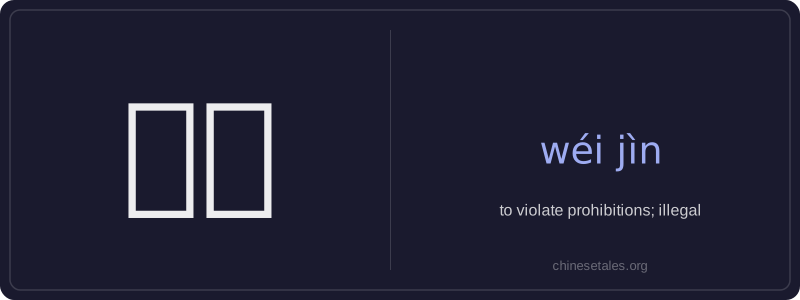
违禁 is an adjective meaning 'illegal' or 'prohibited by law or regulation.' It combines two characters: 违 (wéi), meaning 'to violate' or 'to go against,' and 禁 (jìn), meaning 'prohibition' or 'ban.' Together, they literally mean 'violating a prohibition' — hence describing something that breaks official rules, especially laws or administrative restrictions. The term carries formal, often legal or regulatory weight and is commonly used in contexts like customs, wildlife protection, pharmaceuticals, and public safety.
It frequently appears in compound nouns such as 违禁品 (wéi jìn pǐn, 'contraband') or 违禁行为 (wéi jìn xíng wéi, 'illegal act'). Unlike colloquial terms like 不合法 (bù hé fǎ, 'unlawful'), 违禁 implies a specific, established ban — for example, importing endangered animal parts or unlicensed drugs. It’s rarely used predicatively without a noun complement and seldom appears in casual speech.
Example Sentences
Related Words
国语
‘Guó yǔ’ literally means 'national language'—
无论谁
‘无论谁’ (wú lùn shéi) is a pronoun meaning
不对
不对 (bù duì) literally combines 不 (bù), meani
外语
‘外语’ literally means ‘outside language’ —
违规
违规 (wéi guī) literally means 'to violate rules
亲笔
‘亲笔’ literally means ‘one’s own hand’—comb
我的
我的 (wǒ de) is a possessive pronoun meaning 'my'
短袜
‘短袜’ (duǎn wà) literally means ‘short sock