Word Explanation
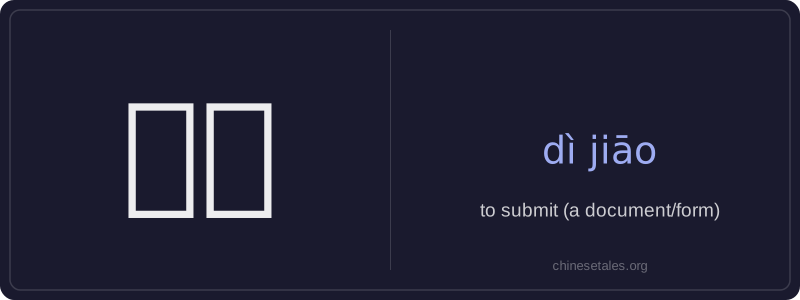
递交 (dì jiāo) is a formal verb meaning 'to submit'—especially documents, applications, reports, or forms—to an authority, office, or person in charge. The character 递 (dì) means 'to deliver' or 'to hand over', often implying movement toward someone or somewhere; 交 (jiāo) means 'to give', 'to hand in', or 'to pass on'. Together, they emphasize the intentional, official act of transferring something important for processing or review.
This word is commonly used in administrative, academic, and professional contexts—such as submitting visa applications, university enrollment forms, tax returns, or resignation letters. It carries a tone of formality and responsibility; you would not use it for casual actions like handing a friend a snack. While 递交 can occasionally appear in written narratives or speeches, it rarely appears in informal spoken Chinese, where simpler verbs like 交 (jiāo) or 提交 (tí jiāo) are more common.
Example Sentences
Related Words
国语
‘Guó yǔ’ literally means 'national language'—
无论谁
‘无论谁’ (wú lùn shéi) is a pronoun meaning
不对
不对 (bù duì) literally combines 不 (bù), meani
外语
‘外语’ literally means ‘outside language’ —
违规
违规 (wéi guī) literally means 'to violate rules
亲笔
‘亲笔’ literally means ‘one’s own hand’—comb
我的
我的 (wǒ de) is a possessive pronoun meaning 'my'
短袜
‘短袜’ (duǎn wà) literally means ‘short sock