Word Explanation
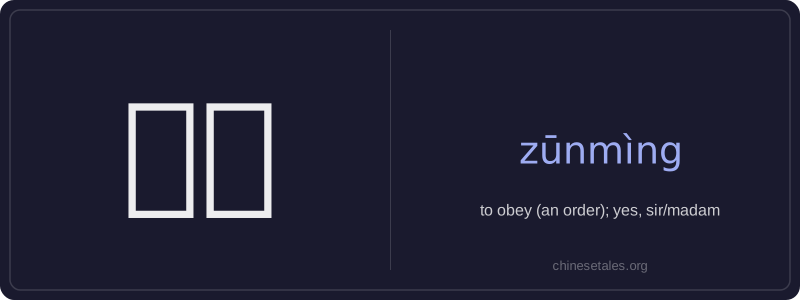
遵命 literally means 'to follow an order' — 遵 (zūn) means 'to obey, to comply with', and 命 (mìng) means 'order, command, instruction'. Together, they form a formal, respectful expression used when acknowledging and accepting a directive, especially from someone in authority. It carries a tone of deference and readiness to act, often implying immediate compliance.
This term is commonly heard in hierarchical or ceremonial contexts: in military settings, traditional service environments (e.g., butlers, attendants), historical dramas, or formal workplace interactions. While it’s grammatically a verb, 遵命 functions most frequently as a standalone response — similar to saying 'Yes, sir!' or 'Understood!' — rather than appearing mid-sentence. Its use in modern casual speech is rare; overusing it may sound overly stiff or theatrical outside appropriate contexts.
Example Sentences
Related Words
国语
‘Guó yǔ’ literally means 'national language'—
无论谁
‘无论谁’ (wú lùn shéi) is a pronoun meaning
不对
不对 (bù duì) literally combines 不 (bù), meani
外语
‘外语’ literally means ‘outside language’ —
违规
违规 (wéi guī) literally means 'to violate rules
亲笔
‘亲笔’ literally means ‘one’s own hand’—comb
我的
我的 (wǒ de) is a possessive pronoun meaning 'my'
短袜
‘短袜’ (duǎn wà) literally means ‘short sock