Word Explanation
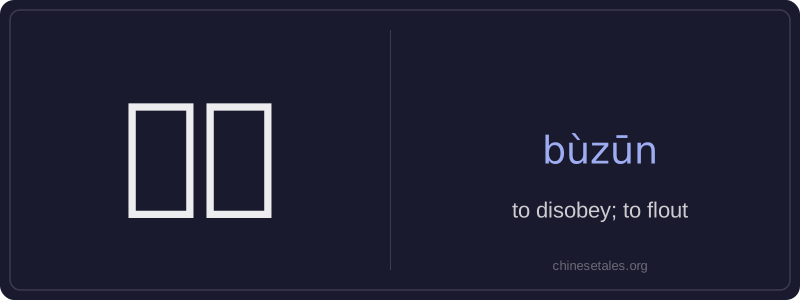
不遵 is a formal, written verb meaning 'to disobey' or 'to flout', especially in relation to rules, laws, orders, or established norms. The first character 不 (bù) is the standard negation prefix, while 遵 (zūn) means 'to obey', 'to comply with', or 'to follow' — as in 遵守 (zūnshǒu, 'to abide by'). Together, they form a compact, two-character compound that conveys deliberate noncompliance, often with a tone of seriousness or criticism.
This word appears frequently in official documents, news reports, legal contexts, and formal speeches — rarely in casual conversation. It implies conscious refusal rather than accidental neglect, and typically carries negative moral or institutional judgment. While grammatically it functions like a transitive verb, it is almost always followed by an object such as 法律 (fǎlǜ, 'law'), 规定 (guīdìng, 'regulation'), or 上级指示 (shàngjí zhǐshì, 'superior’s instructions').
Example Sentences
Related Words
国语
‘Guó yǔ’ literally means 'national language'—
无论谁
‘无论谁’ (wú lùn shéi) is a pronoun meaning
不对
不对 (bù duì) literally combines 不 (bù), meani
外语
‘外语’ literally means ‘outside language’ —
违规
违规 (wéi guī) literally means 'to violate rules
亲笔
‘亲笔’ literally means ‘one’s own hand’—comb
我的
我的 (wǒ de) is a possessive pronoun meaning 'my'
短袜
‘短袜’ (duǎn wà) literally means ‘short sock