Word Explanation
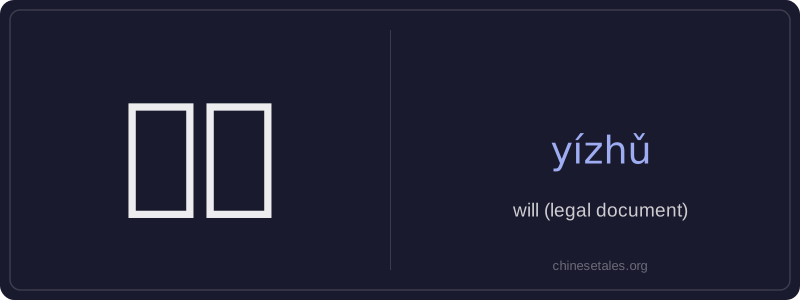
‘遗嘱’ (yízhǔ) is a formal noun meaning 'will'—a legal document in which a person specifies how their property and assets should be distributed after their death. The first character, 遗 (yí), means 'to leave behind' or 'to bequeath', often carrying connotations of something passed on after death. The second character, 嘱 (zhǔ), means 'to instruct' or 'to entrust', emphasizing the authoritative, directive nature of the document. Together, they convey the idea of a solemn, binding instruction left behind for others to follow.
This term is used exclusively in formal, legal, or administrative contexts—not in casual speech. It appears in discussions about estate planning, inheritance law, probate procedures, and family disputes over assets. Unlike informal promises or verbal wishes, a valid 遗嘱 typically requires witnesses, notarization, or specific written formats under Chinese law. It’s associated with seriousness, finality, and responsibility—and is never used for non-legal instructions or everyday requests.
Example Sentences
Related Words
国语
‘Guó yǔ’ literally means 'national language'—
无论谁
‘无论谁’ (wú lùn shéi) is a pronoun meaning
不对
不对 (bù duì) literally combines 不 (bù), meani
外语
‘外语’ literally means ‘outside language’ —
违规
违规 (wéi guī) literally means 'to violate rules
亲笔
‘亲笔’ literally means ‘one’s own hand’—comb
我的
我的 (wǒ de) is a possessive pronoun meaning 'my'
短袜
‘短袜’ (duǎn wà) literally means ‘short sock