Word Explanation
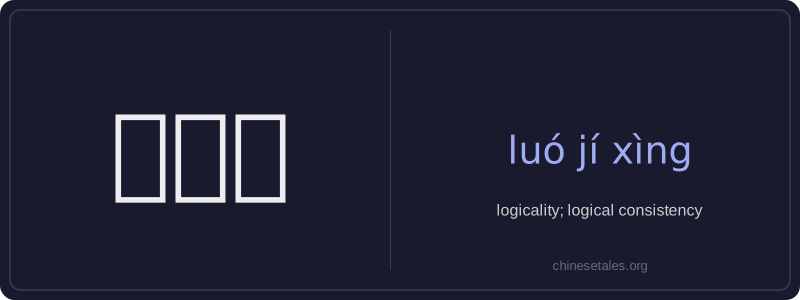
Luó jí xìng is a noun meaning 'logicality' or 'logical consistency'—the quality of being logically sound, coherent, and well-structured. It combines three characters: luó (from luó jí, 'logic') and jí, which together form the loanword for 'logic'; xìng is a common noun suffix meaning 'quality' or 'nature', similar to '-ness' in English (e.g., 'happiness'). So luó jí xìng literally means 'the nature of logic'.
This word is frequently used to evaluate arguments, writing, explanations, or even everyday reasoning—especially in academic, professional, or analytical contexts. You’ll often hear it in feedback ('Your essay lacks logicality') or discussions about clarity and coherence. Unlike colloquial terms like tiáo lǐ (orderliness), luó jí xìng specifically emphasizes cause-effect relationships, valid inference, and structural integrity in thought or expression.
Example Sentences
Related Words
国语
‘Guó yǔ’ literally means 'national language'—
无论谁
‘无论谁’ (wú lùn shéi) is a pronoun meaning
不对
不对 (bù duì) literally combines 不 (bù), meani
外语
‘外语’ literally means ‘outside language’ —
违规
违规 (wéi guī) literally means 'to violate rules
亲笔
‘亲笔’ literally means ‘one’s own hand’—comb
我的
我的 (wǒ de) is a possessive pronoun meaning 'my'
短袜
‘短袜’ (duǎn wà) literally means ‘short sock