Word Explanation
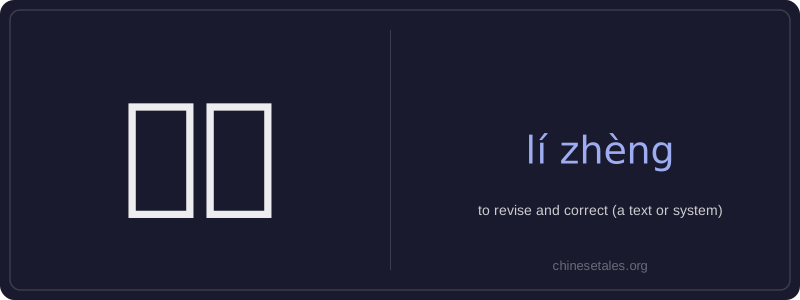
厘正 (lí zhèng) is a formal, literary verb meaning 'to revise and correct'—especially a written text, document, system, or method. The character 厘 (lí) originally meant 'to separate, distinguish, or examine carefully', while 正 (zhèng) means 'to rectify, standardize, or set right'. Together, they convey the idea of meticulously reviewing something and making precise, authoritative corrections. It implies a high degree of care, expertise, and authority—not casual editing, but systematic improvement based on standards or principles.
This term is commonly used in academic, editorial, administrative, and technical contexts: scholars may 厘正 classical texts; government agencies may 厘正 policy guidelines; engineers may 厘正 design specifications. It carries a respectful, serious tone and is rarely used in casual speech or informal writing. You’ll often see it in collocations like 厘正稿 (revised draft), 厘正意见 (suggestions for revision), or 主动请人厘正 (voluntarily ask someone to review and correct one’s work).
Example Sentences
Related Words
国语
‘Guó yǔ’ literally means 'national language'—
无论谁
‘无论谁’ (wú lùn shéi) is a pronoun meaning
不对
不对 (bù duì) literally combines 不 (bù), meani
外语
‘外语’ literally means ‘outside language’ —
违规
违规 (wéi guī) literally means 'to violate rules
亲笔
‘亲笔’ literally means ‘one’s own hand’—comb
我的
我的 (wǒ de) is a possessive pronoun meaning 'my'
短袜
‘短袜’ (duǎn wà) literally means ‘short sock