Word Explanation
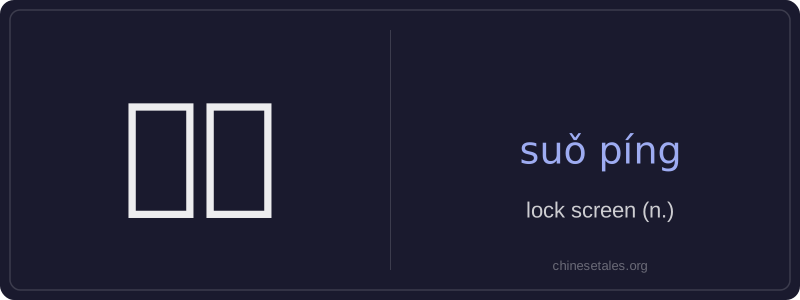
'Lock screen' refers to the security interface that appears when a device (like a smartphone or computer) is idle or manually locked. The word combines two characters: 锁 (suǒ), meaning 'lock' or 'to lock', and 屏 (píng), short for 屏幕 (píngmù), meaning 'screen'. Together, they literally mean 'locked screen' — the state or interface that blocks access until authentication (e.g., password, fingerprint, or face ID) is provided.
This term is used almost exclusively in digital contexts — never for physical doors or locks. It’s common in daily tech-related conversations, settings menus, and user instructions. You’ll see it on devices as a noun (e.g., 'set lock screen wallpaper') or in verb phrases like 'lock the screen' (锁屏). Unlike general security terms, 锁屏 specifically denotes the visual and functional layer activated during device locking.
Example Sentences
Related Words
国语
‘Guó yǔ’ literally means 'national language'—
无论谁
‘无论谁’ (wú lùn shéi) is a pronoun meaning
不对
不对 (bù duì) literally combines 不 (bù), meani
外语
‘外语’ literally means ‘outside language’ —
违规
违规 (wéi guī) literally means 'to violate rules
亲笔
‘亲笔’ literally means ‘one’s own hand’—comb
我的
我的 (wǒ de) is a possessive pronoun meaning 'my'
短袜
‘短袜’ (duǎn wà) literally means ‘short sock