Word Explanation
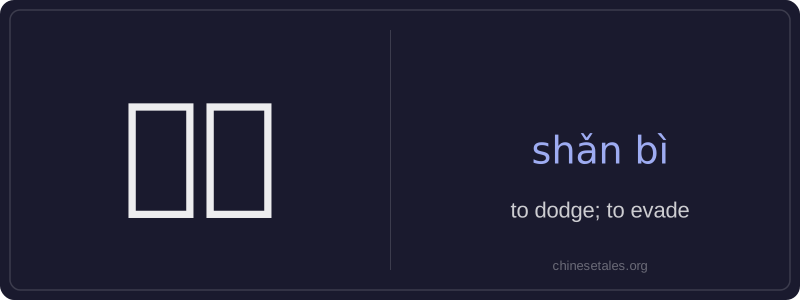
闪避 (shǎn bì) is a compound verb meaning 'to dodge' or 'to evade'—typically referring to quick, physical movement to avoid something threatening, harmful, or unwanted. The first character 闪 (shǎn) conveys suddenness and lateral motion, like a flash or a quick sidestep; the second, 避 (bì), means 'to avoid' or 'to shun', often implying deliberate withdrawal from danger or discomfort. Together, they emphasize an active, agile response rather than passive avoidance.
This word is commonly used in contexts involving physical threat or rapid reaction—especially in descriptions of animal behavior (e.g., prey evading predators), martial arts, sports, or emergency situations. It carries a neutral-to-formal register and is more precise and vivid than generic synonyms like 避开. While it can occasionally appear in figurative use (e.g., dodging responsibility), such usage is rare and usually marked by context or metaphorical framing.
Example Sentences
Related Words
国语
‘Guó yǔ’ literally means 'national language'—
无论谁
‘无论谁’ (wú lùn shéi) is a pronoun meaning
不对
不对 (bù duì) literally combines 不 (bù), meani
外语
‘外语’ literally means ‘outside language’ —
违规
违规 (wéi guī) literally means 'to violate rules
亲笔
‘亲笔’ literally means ‘one’s own hand’—comb
我的
我的 (wǒ de) is a possessive pronoun meaning 'my'
短袜
‘短袜’ (duǎn wà) literally means ‘short sock