Word Explanation
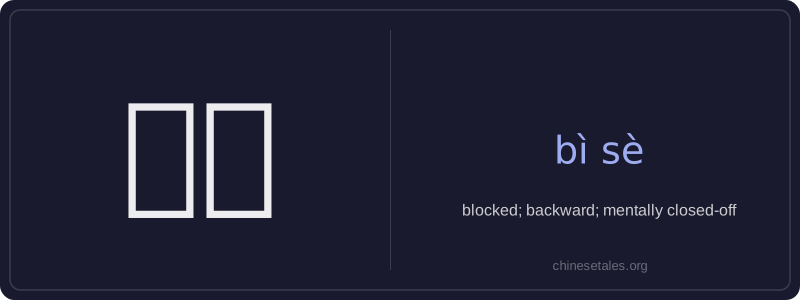
闭塞 literally combines 闭 (bì, 'to close') and 塞 (sè, 'to block or obstruct'), forming an adjective meaning 'blocked' in a physical sense—like a blocked road or clogged pipe—or 'backward' and 'isolated' in a social or developmental context. It often describes places with poor transportation, limited access to information, or communities resistant to new ideas.
The word carries a slightly negative connotation, implying stagnation or lack of openness. While it can describe physical obstruction (e.g., a blocked drain), its more common and nuanced usage refers to socio-economic or intellectual isolation—such as a remote village lacking internet or education, or a person unwilling to consider alternative viewpoints. It is frequently used in formal writing, news reports, and policy discussions about regional development or cultural exchange.
Example Sentences
Related Words
国语
‘Guó yǔ’ literally means 'national language'—
无论谁
‘无论谁’ (wú lùn shéi) is a pronoun meaning
不对
不对 (bù duì) literally combines 不 (bù), meani
外语
‘外语’ literally means ‘outside language’ —
违规
违规 (wéi guī) literally means 'to violate rules
亲笔
‘亲笔’ literally means ‘one’s own hand’—comb
我的
我的 (wǒ de) is a possessive pronoun meaning 'my'
短袜
‘短袜’ (duǎn wà) literally means ‘short sock