Word Explanation
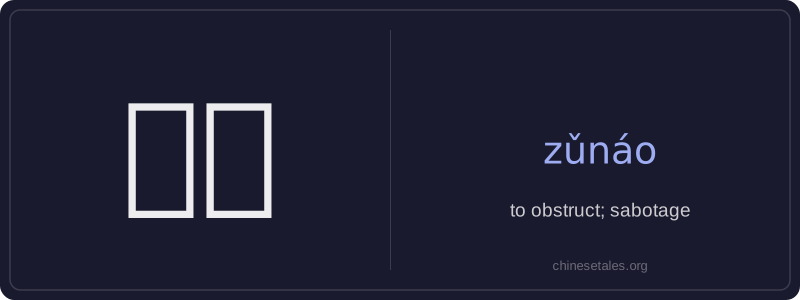
阻挠 (zǔnáo) is a transitive verb meaning 'to obstruct,' 'to hinder,' or 'to sabotage' — typically with deliberate, active interference aimed at preventing something from happening or succeeding. The first character 阻 (zǔ) means 'to block' or 'to impede,' often suggesting physical or procedural barriers; the second 挠 (náo) means 'to disturb,' 'to disrupt,' or 'to interfere,' adding a sense of persistent, frustrating intervention. Together, they convey purposeful, often oppositional resistance — not accidental delay but intentional obstruction.
This word is commonly used in formal, political, legal, or organizational contexts: e.g., blocking policy implementation, hindering investigations, or sabotaging negotiations. It carries a moderately negative connotation and implies agency and intent — the subject is usually a person, group, or institution acting against progress, justice, or agreed-upon goals. While it can appear in news reports or official statements, it’s less common in casual speech than simpler verbs like 阻止 (zǔzhǐ) or 阻碍 (zǔ’ài).
Example Sentences
Related Words
国语
‘Guó yǔ’ literally means 'national language'—
无论谁
‘无论谁’ (wú lùn shéi) is a pronoun meaning
不对
不对 (bù duì) literally combines 不 (bù), meani
外语
‘外语’ literally means ‘outside language’ —
违规
违规 (wéi guī) literally means 'to violate rules
亲笔
‘亲笔’ literally means ‘one’s own hand’—comb
我的
我的 (wǒ de) is a possessive pronoun meaning 'my'
短袜
‘短袜’ (duǎn wà) literally means ‘short sock