Word Explanation
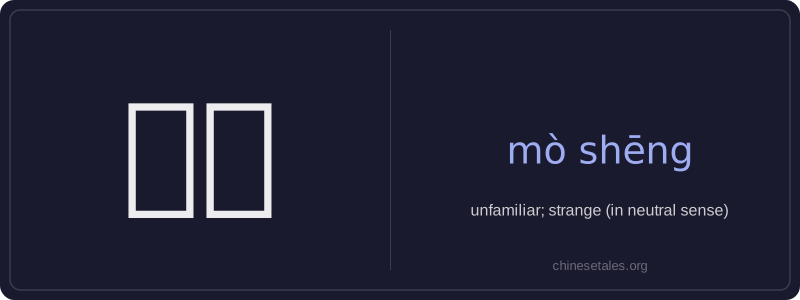
'陌生' is an adjective meaning 'unfamiliar' or 'strange' in a neutral, non-threatening sense — it describes something or someone not previously known or experienced. The character '陌' originally meant 'a side road' (implying unfamiliar terrain), and '生' means 'raw', 'uncooked', or 'not yet acquainted'; together, they evoke the idea of encountering something outside one’s usual experience or knowledge.
This word commonly modifies nouns (e.g., 陌生人, 陌生环境) and often appears in contexts like meeting new people, visiting new places, or encountering new concepts. It carries no negative connotation by itself — unlike '可怕' (scary) or '讨厌' (dislikable) — so saying '这很陌生' simply means 'this is unfamiliar', not 'this is frightening'. It’s frequently used in daily life: navigating a new city, starting a job, or learning a new skill.
Example Sentences
Related Words
国语
‘Guó yǔ’ literally means 'national language'—
无论谁
‘无论谁’ (wú lùn shéi) is a pronoun meaning
不对
不对 (bù duì) literally combines 不 (bù), meani
外语
‘外语’ literally means ‘outside language’ —
违规
违规 (wéi guī) literally means 'to violate rules
亲笔
‘亲笔’ literally means ‘one’s own hand’—comb
我的
我的 (wǒ de) is a possessive pronoun meaning 'my'
短袜
‘短袜’ (duǎn wà) literally means ‘short sock