Word Explanation
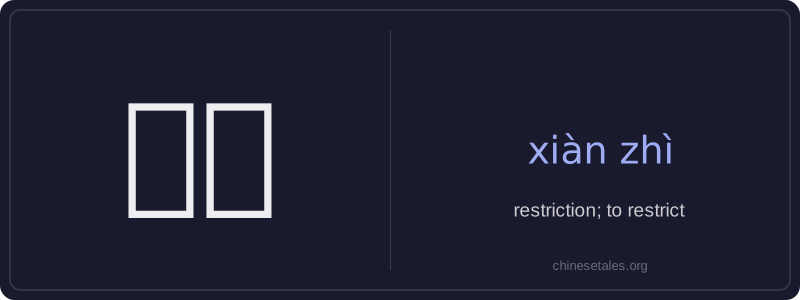
限制 (xiàn zhì) is a versatile word meaning 'restriction' as a noun and 'to restrict' as a verb. The first character 限 means 'limit' or 'boundary', and the second character 制 means 'to control' or 'to regulate'; together, they convey the idea of imposing boundaries or controlling something within defined limits. It is commonly used in formal, administrative, scientific, and everyday contexts — for example, when discussing laws, environmental policies, animal conservation measures, or personal habits.
In conservation biology, 限制 frequently appears in phrases like '限制捕猎' (restrict hunting) or '限制栖息地开发' (restrict habitat development), emphasizing deliberate human intervention to protect vulnerable species or ecosystems. As a verb, it typically takes a direct object (e.g., 限制数量, 限制时间) and often appears with modal verbs (如:必须限制, 不应限制) or passive constructions (如:被严格限制). Its tone is neutral to formal, rarely used in casual speech without context.
Example Sentences
Related Words
国语
‘Guó yǔ’ literally means 'national language'—
无论谁
‘无论谁’ (wú lùn shéi) is a pronoun meaning
不对
不对 (bù duì) literally combines 不 (bù), meani
外语
‘外语’ literally means ‘outside language’ —
违规
违规 (wéi guī) literally means 'to violate rules
亲笔
‘亲笔’ literally means ‘one’s own hand’—comb
我的
我的 (wǒ de) is a possessive pronoun meaning 'my'
短袜
‘短袜’ (duǎn wà) literally means ‘short sock