Word Explanation
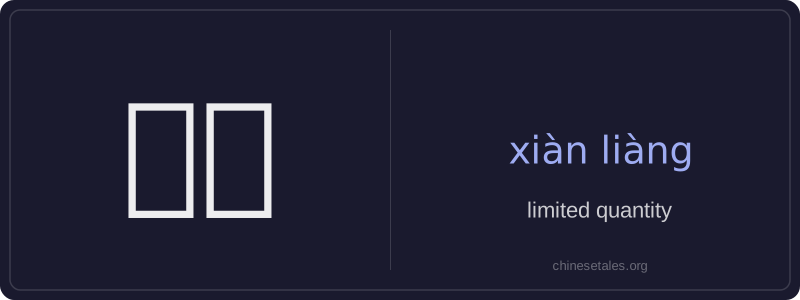
限量 literally means 'limit + quantity' and functions as a noun meaning 'limited quantity' or 'limited edition.' The first character 限 (xiàn) means 'to restrict' or 'to limit,' while the second character 量 (liàng) means 'quantity' or 'amount.' Together, they describe a predetermined, finite number of items—often used in commercial, conservation, or regulatory contexts where supply is intentionally capped.
This term frequently appears in announcements about scarce resources, such as wildlife quotas, collectible merchandise, or ticket sales. It implies exclusivity and scarcity, and often carries a formal or official tone. While it can modify nouns (e.g., 限量版 'limited edition'), it most commonly appears after measure words or verbs like 发售 (to launch for sale) or 发放 (to distribute), emphasizing controlled distribution rather than describing inherent properties of an object.
Example Sentences
Related Words
国语
‘Guó yǔ’ literally means 'national language'—
无论谁
‘无论谁’ (wú lùn shéi) is a pronoun meaning
不对
不对 (bù duì) literally combines 不 (bù), meani
外语
‘外语’ literally means ‘outside language’ —
违规
违规 (wéi guī) literally means 'to violate rules
亲笔
‘亲笔’ literally means ‘one’s own hand’—comb
我的
我的 (wǒ de) is a possessive pronoun meaning 'my'
短袜
‘短袜’ (duǎn wà) literally means ‘short sock