Word Explanation
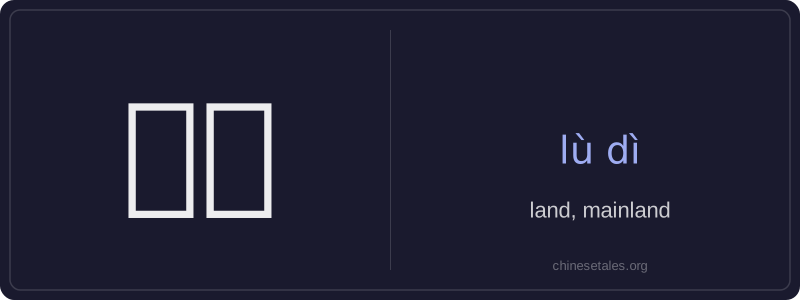
‘陆地’ (lù dì) literally combines ‘陆’ (lù), meaning ‘land’ or ‘mainland’, and ‘地’ (dì), meaning ‘earth’ or ‘ground’. Together, they refer to solid, non-aquatic terrain — the dry surface of the Earth, as opposed to oceans, seas, or islands. It is a neutral, formal noun commonly used in geography, science, news, and everyday speech when distinguishing land from water.
The term emphasizes physical territory rather than political boundaries; for example, it’s used when discussing continental landmasses, wildlife habitats, or transportation infrastructure. Unlike ‘土地’ (tǔdì), which often implies soil, farmland, or ownership, ‘陆地’ focuses on geographical extent and natural surface area. It can also appear in compound terms like ‘陆地动物’ (land animals) or ‘大陆’ (continent/mainland), though ‘大陆’ carries stronger geopolitical connotations.
Example Sentences
Related Words
国语
‘Guó yǔ’ literally means 'national language'—
无论谁
‘无论谁’ (wú lùn shéi) is a pronoun meaning
不对
不对 (bù duì) literally combines 不 (bù), meani
外语
‘外语’ literally means ‘outside language’ —
违规
违规 (wéi guī) literally means 'to violate rules
亲笔
‘亲笔’ literally means ‘one’s own hand’—comb
我的
我的 (wǒ de) is a possessive pronoun meaning 'my'
短袜
‘短袜’ (duǎn wà) literally means ‘short sock