Word Explanation
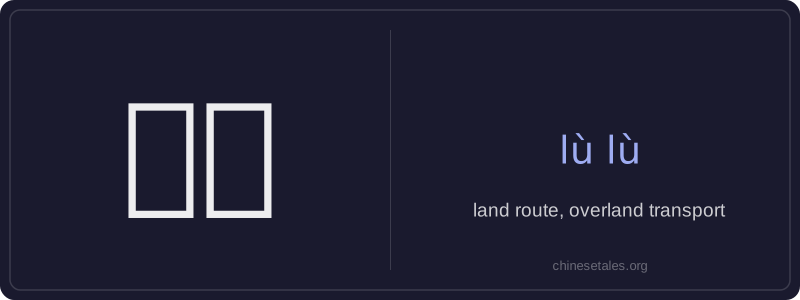
‘陆路’ literally combines ‘陆’ (lù), meaning ‘land’ or ‘mainland’, and ‘路’ (lù), meaning ‘road’ or ‘route’. Together, it refers specifically to transportation or travel that occurs entirely on land—such as by car, train, bus, or bicycle—as opposed to sea or air routes. It emphasizes the medium and geography of movement rather than the vehicle itself.
This term is commonly used in logistics, travel planning, and official contexts—for example, when comparing shipping options (‘陆路运输’ vs. ‘海运’ or ‘空运’) or describing border crossings (e.g., entering China via land). While ‘路’ alone can mean any kind of path, adding ‘陆’ specifies terrestrial infrastructure and distinguishes it from waterways or airspace. It’s neutral in register and appears frequently in news reports, government documents, and transportation signage.
Example Sentences
Related Words
国语
‘Guó yǔ’ literally means 'national language'—
无论谁
‘无论谁’ (wú lùn shéi) is a pronoun meaning
不对
不对 (bù duì) literally combines 不 (bù), meani
外语
‘外语’ literally means ‘outside language’ —
违规
违规 (wéi guī) literally means 'to violate rules
亲笔
‘亲笔’ literally means ‘one’s own hand’—comb
我的
我的 (wǒ de) is a possessive pronoun meaning 'my'
短袜
‘短袜’ (duǎn wà) literally means ‘short sock