Word Explanation
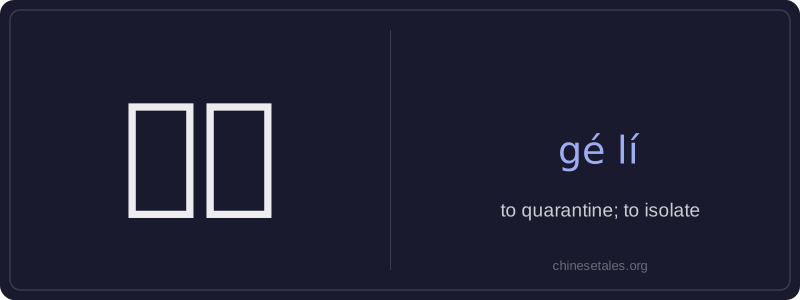
隔离 (gé lí) literally combines 隔 (gé), meaning 'to separate' or 'to partition', and 离 (lí), meaning 'to depart' or 'to distance'. Together, they convey the idea of physically or socially separating someone or something to prevent contact—especially to stop disease transmission. It is most commonly used in public health contexts, such as during outbreaks, but also applies to technical or environmental settings where containment is needed.
The word functions primarily as a verb, often followed by an object (e.g., 隔离病人 — 'quarantine patients') or used reflexively (e.g., 自我隔离 — 'self-isolate'). It can also appear as a noun meaning 'quarantine' or 'isolation' (e.g., 进入隔离 — 'enter quarantine'). Unlike casual synonyms like 分开 (fēn kāi), 隔离 implies formality, intentionality, and often official or medical authority.
Example Sentences
Related Words
国语
‘Guó yǔ’ literally means 'national language'—
无论谁
‘无论谁’ (wú lùn shéi) is a pronoun meaning
不对
不对 (bù duì) literally combines 不 (bù), meani
外语
‘外语’ literally means ‘outside language’ —
违规
违规 (wéi guī) literally means 'to violate rules
亲笔
‘亲笔’ literally means ‘one’s own hand’—comb
我的
我的 (wǒ de) is a possessive pronoun meaning 'my'
短袜
‘短袜’ (duǎn wà) literally means ‘short sock