Word Explanation
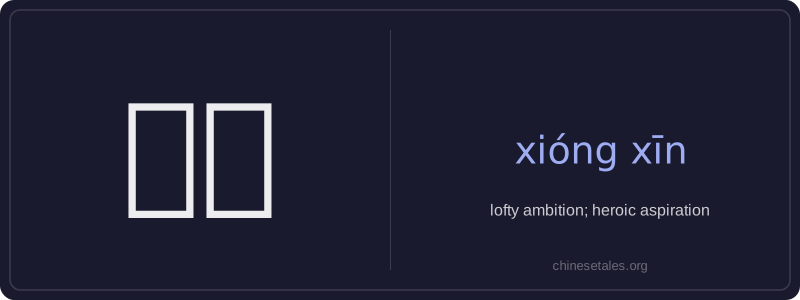
‘雄心’ literally combines ‘xiónɡ’ (masculine, heroic, imposing) and ‘xīn’ (heart, mind), evoking the image of a bold, courageous heart — hence its core meaning: lofty ambition or heroic aspiration. Unlike neutral terms like ‘目标’ (goal) or ‘计划’ (plan), 雄心 carries strong connotative weight: it implies grandeur, determination, and moral or visionary strength. It often describes aspirations that inspire admiration — such as founding a social enterprise, pioneering scientific research, or pursuing artistic excellence against great odds.
This word is commonly used in formal or literary contexts — speeches, essays, biographies — and rarely in casual daily talk. It’s typically modified by adjectives like ‘远大的’ (far-reaching), ‘勃勃的’ (vigorous), or ‘坚定的’ (resolute). While it can describe individuals, it’s also frequently applied to groups, nations, or historical movements, underscoring collective drive and idealism.
Example Sentences
Related Words
国语
‘Guó yǔ’ literally means 'national language'—
无论谁
‘无论谁’ (wú lùn shéi) is a pronoun meaning
不对
不对 (bù duì) literally combines 不 (bù), meani
外语
‘外语’ literally means ‘outside language’ —
违规
违规 (wéi guī) literally means 'to violate rules
亲笔
‘亲笔’ literally means ‘one’s own hand’—comb
我的
我的 (wǒ de) is a possessive pronoun meaning 'my'
短袜
‘短袜’ (duǎn wà) literally means ‘short sock