Word Explanation
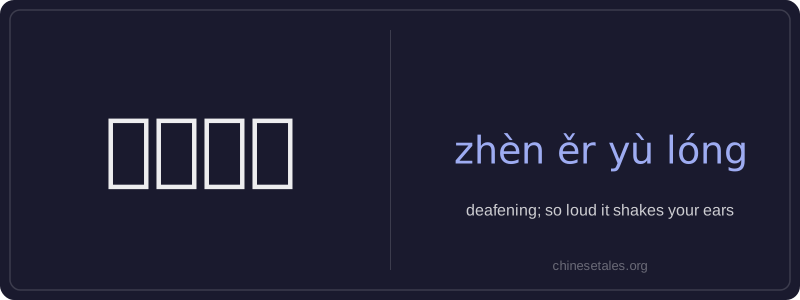
‘震耳欲聋’ is a vivid four-character idiom meaning 'deafening' — literally 'shaking the ears to the point of causing deafness.' Each character contributes to this dramatic image: 震 (zhèn) means 'to shake' or 'to stun'; 耳 (ěr) means 'ear'; 欲 (yù) means 'about to' or 'on the verge of'; and 聋 (lóng) means 'deafness.' Together, they form an intensified description of extreme loudness that overwhelms the senses.
This idiom is commonly used in descriptive writing and speech to emphasize overwhelming noise — such as explosions, concerts, construction sites, or crowded markets. It carries a strong rhetorical effect and is often found in literature, news reports, and spoken Chinese when emphasizing intensity. While it’s not used in formal technical contexts (e.g., acoustics measurements), it’s widely understood and appreciated for its expressive power and classical literary flavor.
Example Sentences
Related Words
国语
‘Guó yǔ’ literally means 'national language'—
无论谁
‘无论谁’ (wú lùn shéi) is a pronoun meaning
不对
不对 (bù duì) literally combines 不 (bù), meani
外语
‘外语’ literally means ‘outside language’ —
违规
违规 (wéi guī) literally means 'to violate rules
亲笔
‘亲笔’ literally means ‘one’s own hand’—comb
我的
我的 (wǒ de) is a possessive pronoun meaning 'my'
短袜
‘短袜’ (duǎn wà) literally means ‘short sock