Word Explanation
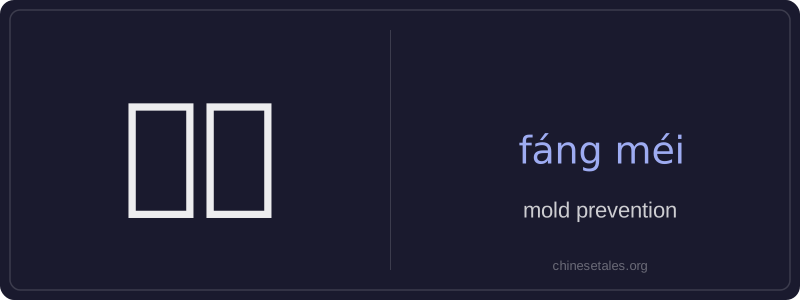
防霉 (fáng méi) literally means 'prevent mold' — 防 (fáng) means 'to prevent' or 'to guard against', and 霉 (méi) means 'mold' or 'mildew'. Together, they form a compound noun referring to the practice, methods, or materials used to stop mold growth. It’s commonly used in contexts related to food storage, building maintenance, clothing care, and household hygiene.
This term appears frequently on product labels (e.g.,防霉剂 'mold inhibitor'), in home improvement advice, and public health guidelines — especially in humid climates where mold poses health risks like allergies or respiratory irritation. While it functions grammatically as a noun, it often modifies other nouns (e.g., 防霉处理 'mold-prevention treatment') or serves as the subject/object of verbs like 做 (do), 用 (use), or 重要 (important).
Example Sentences
Related Words
国语
‘Guó yǔ’ literally means 'national language'—
无论谁
‘无论谁’ (wú lùn shéi) is a pronoun meaning
不对
不对 (bù duì) literally combines 不 (bù), meani
外语
‘外语’ literally means ‘outside language’ —
违规
违规 (wéi guī) literally means 'to violate rules
亲笔
‘亲笔’ literally means ‘one’s own hand’—comb
我的
我的 (wǒ de) is a possessive pronoun meaning 'my'
短袜
‘短袜’ (duǎn wà) literally means ‘short sock