Word Explanation
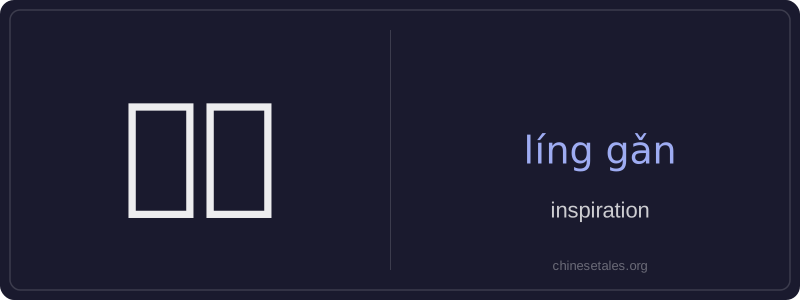
灵感 (líng gǎn) literally combines 灵 (líng), meaning 'spirit', 'soul', or 'nimble', and 感 (gǎn), meaning 'feeling' or 'perception'. Together, they form the abstract noun 'inspiration' — that sudden, often intuitive flash of creative insight or idea. Unlike ordinary thinking, 灵感 suggests a spontaneous, almost magical mental spark, commonly associated with artistic, literary, or innovative work.
This word is used in formal and informal contexts but carries a slightly elevated or poetic tone. It’s often paired with verbs like 产生 (to arise), 获得 (to obtain), or 缺乏 (to lack). While not tied to any physical source, traditional usage sometimes evokes ancient ideas of spiritual inspiration — hence its inclusion in the 'Emotions' topic rather than 'Animals' or 'Plants'. It’s uncountable in Chinese and rarely pluralized.
Example Sentences
Related Words
国语
‘Guó yǔ’ literally means 'national language'—
无论谁
‘无论谁’ (wú lùn shéi) is a pronoun meaning
不对
不对 (bù duì) literally combines 不 (bù), meani
外语
‘外语’ literally means ‘outside language’ —
违规
违规 (wéi guī) literally means 'to violate rules
亲笔
‘亲笔’ literally means ‘one’s own hand’—comb
我的
我的 (wǒ de) is a possessive pronoun meaning 'my'
短袜
‘短袜’ (duǎn wà) literally means ‘short sock