Word Explanation
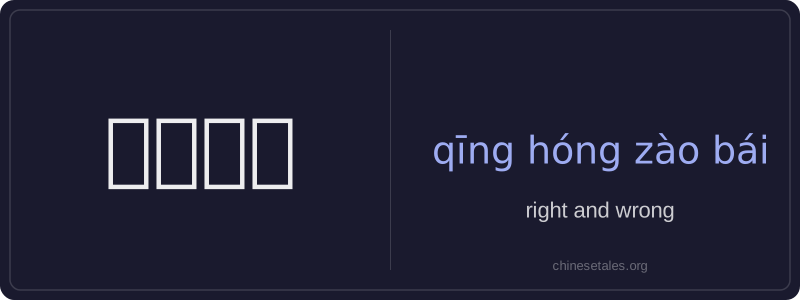
Qīng hóng zào bái literally combines four colors: 'blue/green' (青), 'red' (红), 'black soap' (皂, an old term for dark or black), and 'white' (白). Historically, these represented the four basic colors used in traditional Chinese dyeing and painting — symbolizing all possible distinctions or categories. Over time, the phrase evolved metaphorically to mean 'the full picture' or 'all the facts,' especially when distinguishing right from wrong, truth from falsehood, or cause from effect.
It's commonly used in contexts where someone acts hastily without investigating fairly — for example, jumping to conclusions or blaming others without hearing both sides. The expression carries a mild critical or admonishing tone, often implying that fairness and objectivity are missing. It appears frequently in spoken Mandarin and written commentary, especially in discussions about justice, family disputes, or workplace conflicts.
Example Sentences
Related Words
国语
‘Guó yǔ’ literally means 'national language'—
无论谁
‘无论谁’ (wú lùn shéi) is a pronoun meaning
不对
不对 (bù duì) literally combines 不 (bù), meani
外语
‘外语’ literally means ‘outside language’ —
违规
违规 (wéi guī) literally means 'to violate rules
亲笔
‘亲笔’ literally means ‘one’s own hand’—comb
我的
我的 (wǒ de) is a possessive pronoun meaning 'my'
短袜
‘短袜’ (duǎn wà) literally means ‘short sock