Word Explanation
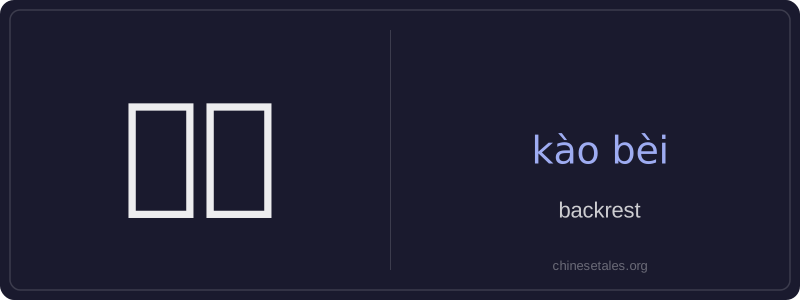
‘靠背’ literally means ‘to lean against the back’ — combining 靠 (kào, ‘to lean on, rely on’) and 背 (bèi, ‘back’). It refers specifically to the vertical support at the rear of a chair, sofa, or other seating furniture that users rest their backs against. Unlike the broader term ‘back’, 靠背 is a functional, structural component designed for physical support during sitting.
This word appears most often in descriptions of furniture, interior design, ergonomics, and product specifications. It’s commonly used in compound terms like 靠背椅 (kào bèi yǐ, ‘backrest chair’) or 椅子靠背 (yǐzi kào bèi, ‘chair backrest’). While it can appear in casual speech, it’s more frequent in descriptive or technical contexts than in everyday conversation — you’d say ‘这椅子的靠背很舒服’ rather than just ‘靠背’ alone as a standalone topic.
Example Sentences
Related Words
国语
‘Guó yǔ’ literally means 'national language'—
无论谁
‘无论谁’ (wú lùn shéi) is a pronoun meaning
不对
不对 (bù duì) literally combines 不 (bù), meani
外语
‘外语’ literally means ‘outside language’ —
违规
违规 (wéi guī) literally means 'to violate rules
亲笔
‘亲笔’ literally means ‘one’s own hand’—comb
我的
我的 (wǒ de) is a possessive pronoun meaning 'my'
短袜
‘短袜’ (duǎn wà) literally means ‘short sock