Word Explanation
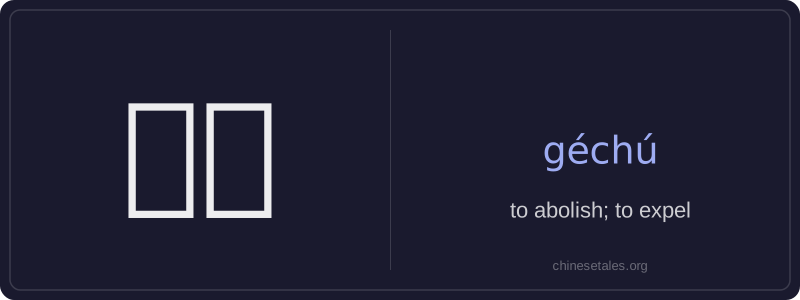
革除 (géchú) is a formal, written verb meaning 'to abolish' or 'to expel' — typically used for removing undesirable systems, practices, people, or habits. The character 革 (gé) originally meant 'leather' but evolved to signify 'change' or 'reform' (as in revolution), while 除 (chú) means 'to remove' or 'to eliminate'. Together, they convey a decisive, authoritative act of removal — often implying moral or institutional judgment, not just physical deletion.
This word appears frequently in official documents, news reports, and academic writing, especially when discussing policy reform (e.g., abolishing outdated regulations) or disciplinary actions (e.g., expelling someone from an organization). It carries stronger connotations than common alternatives like 取消 (qǔxiāo) or 去掉 (qùdiào), suggesting permanence, seriousness, and top-down authority. It is rarely used in casual speech or for minor, everyday removals.
Example Sentences
Related Words
国语
‘Guó yǔ’ literally means 'national language'—
无论谁
‘无论谁’ (wú lùn shéi) is a pronoun meaning
不对
不对 (bù duì) literally combines 不 (bù), meani
外语
‘外语’ literally means ‘outside language’ —
违规
违规 (wéi guī) literally means 'to violate rules
亲笔
‘亲笔’ literally means ‘one’s own hand’—comb
我的
我的 (wǒ de) is a possessive pronoun meaning 'my'
短袜
‘短袜’ (duǎn wà) literally means ‘short sock